
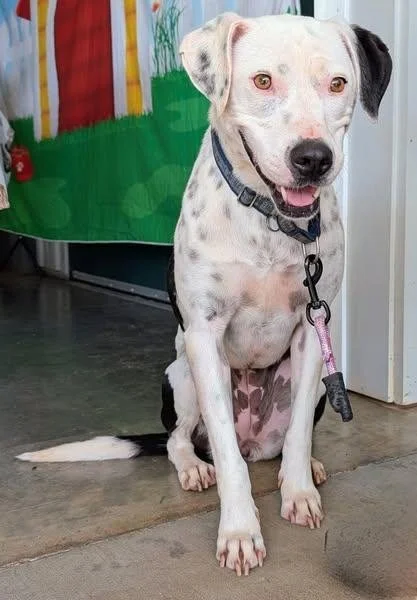
Location: Landrum, South Carolina at Pet Tender Angels Rescue and Rehabilitation
Breed: Pit Bull Terrier Mix
Age: Approximately 6 years old
Date of Birth: Approximately May 2020
Gender: Female
Weight: Approximately 45 lbs
How to Adopt Knox
Knox is available through Pet Tender Angels Rescue and Rehabilitation, a dog rescue and sanctuary located in Landrum, South Carolina.
Visit Pet Tender Angels’ Website
Email: pet10der@aol.com
Phone: 864-787-2498
Mailing Address: P.O. Box 273, Landrum, SC 29356
Pet Tender Angels requires prospective adopters to complete an application or participate in a telephone interview before scheduling a visit.
If a family meets Knox and would like to move forward, the rescue will arrange a wellness visit with its veterinarian. It will then schedule a home visit and bring Knox to the applicant’s home.
This visit allows the rescue to observe how Knox responds to the environment and meet any resident animals. If the home visit goes well and everyone agrees that the placement is appropriate, the adoption can be finalized.
Applicants should contact Pet Tender Angels directly to confirm Knox’s current availability, adoption fee, veterinary records, compatibility recommendations, and application instructions.
About Knox
Prepare to have your heart stolen by Knox—affectionately known as Knoxie.
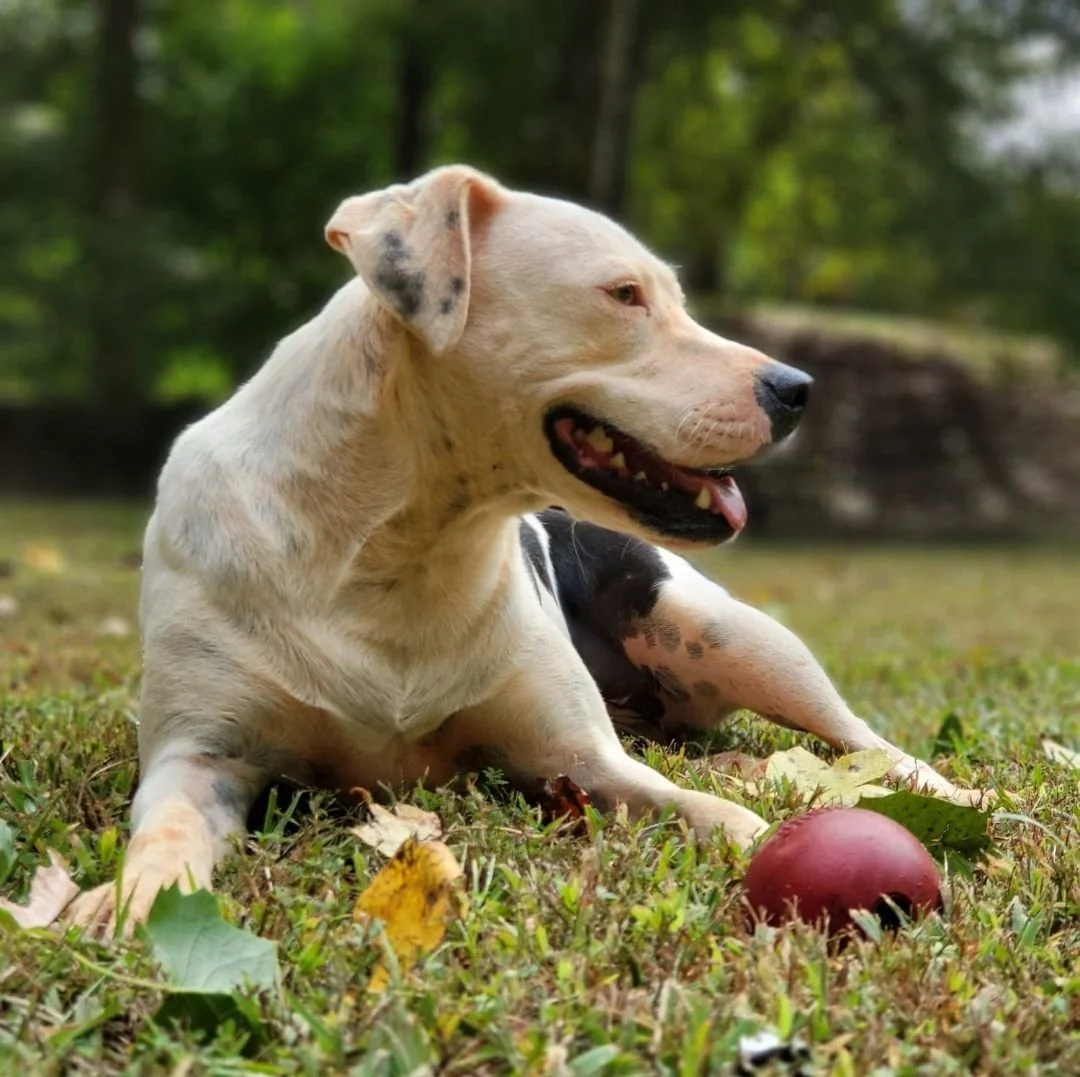
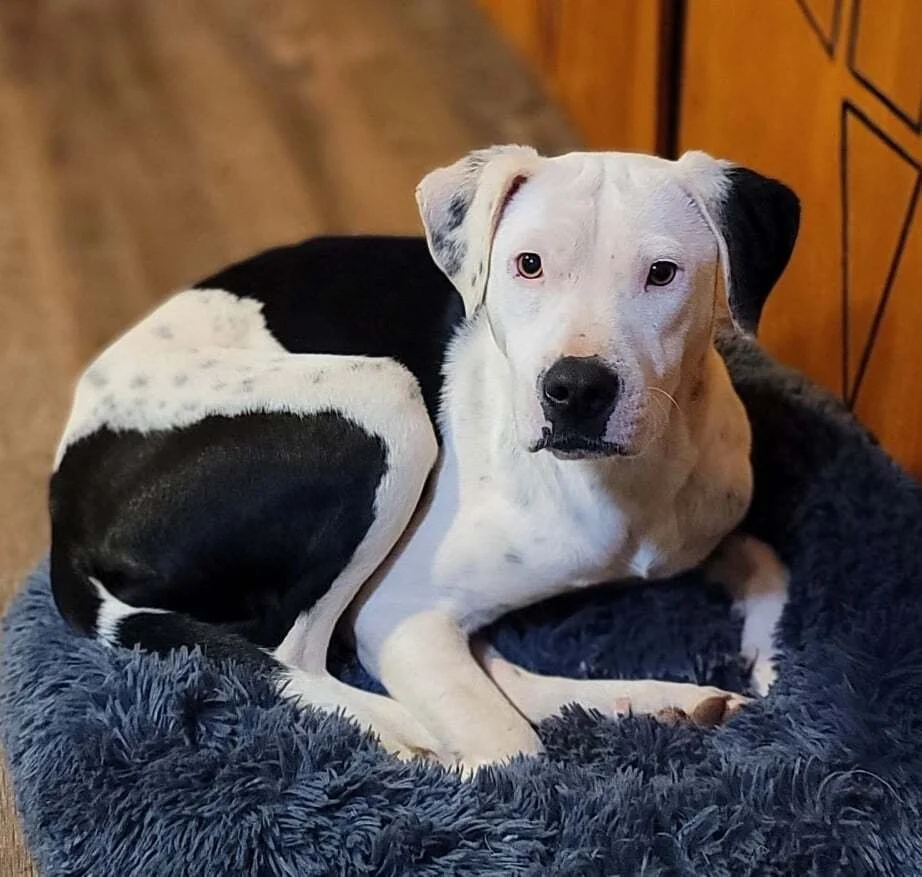
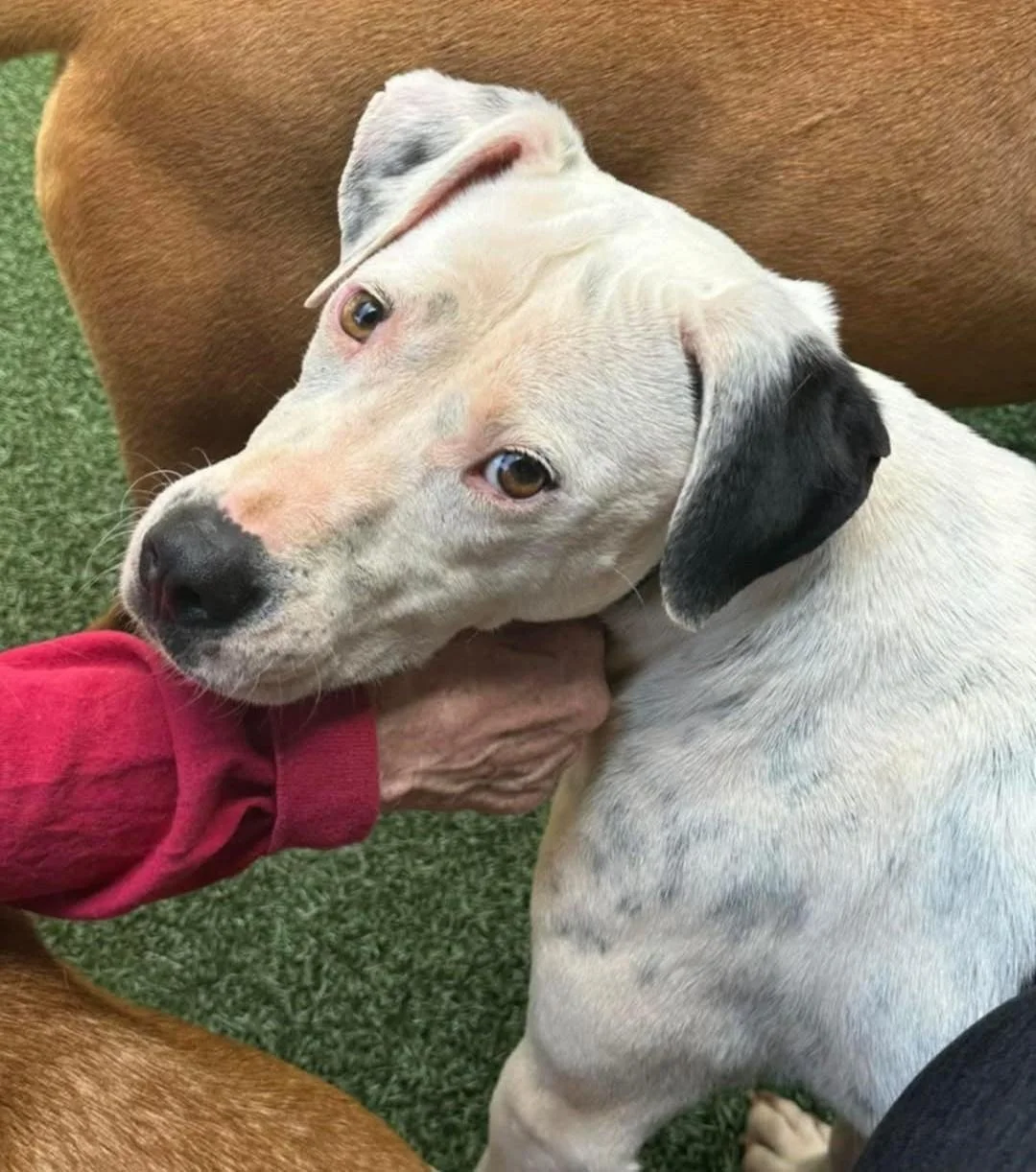
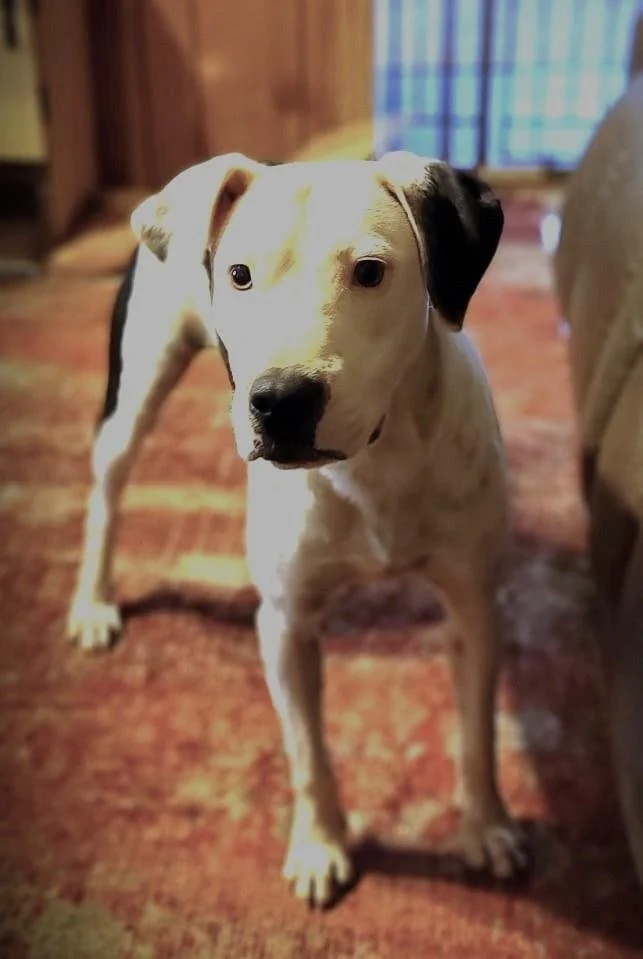
Knox is a beautiful Pit Bull Terrier mix born around May 2020. She weighs approximately 45 pounds and has a short black coat accented by white or cream markings.
Her happy face and playful personality reveal the loving dog she has become, but Knox’s journey did not begin with the security every puppy deserves.
She was rescued as a feral puppy.
During the earliest and most important stage of her life, Knox apparently did not receive the positive human interaction and socialization that help puppies understand that people are safe. As a result, she may initially feel shy or uncertain when meeting someone unfamiliar.
That hesitation is only the beginning of her story—not the entirety of who she is.
When someone approaches Knox with patience and understanding, her sweet personality begins to emerge. She learns that the person in front of her can be trusted, allowing her playful, affectionate, and joyful nature to shine.
Knox is remarkably obedient and trainable. She thrives when people communicate with her gently and create a positive connection rather than placing pressure on her.
Once Knox becomes comfortable, she lights up with excitement. She loves to play, engage with the people she trusts, and experience the happiness she was once denied.
Despite everything she has overcome, Knox has retained an incredible capacity for love.
Now approximately six years old, she has spent far too long waiting for a permanent family. She is ready for someone to look beyond her initial shyness and recognize the devoted companion waiting underneath.
Characteristics
Sweet: Knox has a gentle, loving nature that emerges as she begins trusting someone.
Initially Shy: She may need additional time to observe unfamiliar people before feeling comfortable.
Affectionate: Once a connection has formed, Knox can become an incredibly loving companion.
Playful: She enjoys having fun and becomes visibly excited when she feels safe.
Happy: Knox approaches trusted people and enjoyable activities with a joyful spirit.
Resilient: After beginning life as a feral puppy, she has made extraordinary progress.
Trainable: Knox responds well to patient, positive guidance.
Obedient: Her profile describes her as remarkably obedient.
Sensitive: She needs people who understand that trust cannot be forced.
Devoted: Knox has the potential to form a deep bond with the person who earns her confidence.
Loyal: Her future family can expect a companion who values the relationships she builds.
House-Trained: Knox already understands an important part of living inside a home.
Medium-Sized: At approximately 45 pounds, she is a manageable size for many households.
Long-Waiting: Knox has been searching for her permanent home for far too long.
From Feral Puppy to Loving Companion
A feral puppy has generally had little or no positive contact with humans during early development.
Without gentle socialization, ordinary interactions—eye contact, reaching hands, unfamiliar voices, leashes, household sounds, or physical handling—may initially feel confusing or frightening.
Knox did not choose that beginning.
Her early circumstances taught her to be cautious, but her progress since being rescued demonstrates her ability to learn, adapt, and form meaningful relationships.
Every time Knox chooses to approach a person, participate in training, initiate play, or relax in someone’s presence, she shows how far she has come.
Her adopter will need to continue honoring that progress.
Knox should not be expected to greet every stranger enthusiastically or feel comfortable immediately after entering a new environment. She needs someone who recognizes that a thoughtful pause is not rejection—it is simply Knox gathering information and deciding whether she is safe.
Helpful ways to earn her trust may include:
Allowing Knox to approach voluntarily
Sitting quietly nearby
Speaking in a calm voice
Avoiding prolonged direct staring
Tossing treats without reaching over her
Moving slowly and predictably
Taking quiet walks together
Rewarding voluntary check-ins
Keeping her routine consistent
Providing a comfortable retreat
Introducing unfamiliar people gradually
Avoiding forced physical affection
Respecting her attempts to move away
Giving her uninterrupted time to rest
Celebrating small moments of confidence
With patience, the cautious dog someone initially meets can blossom into the happy, playful Knoxie her caregivers already know.
Building a Positive Connection
Knox’s profile emphasizes that she thrives through positive connection.
For a sensitive dog, connection develops when interactions are safe, predictable, and rewarding. Knox needs to understand that her person will listen when she communicates and will not force her into situations she cannot yet handle.
Her adopter can build that relationship through ordinary moments:
Preparing her meals
Taking relaxed walks
Practicing short training sessions
Sitting together without demanding interaction
Offering enrichment activities
Playing when Knox initiates
Rewarding calm behavior
Following a predictable schedule
Providing guidance without intimidation
Allowing her to make appropriate choices
Some of the most meaningful progress may appear small.
Knox choosing to lie closer to her adopter, approaching for a treat, playing in their presence, making eye contact, or relaxing enough to sleep deeply can all indicate growing trust.
Once Knox knows that someone is dependable, she has the potential to become a deeply loving and devoted friend.
Training
Knox is described as incredibly trainable and remarkably obedient.
Her ability to learn can help her transition into a permanent home, but training should remain positive and relationship-focused. Rewards, repetition, and clear communication will be far more beneficial than punishment or intimidation.
Helpful skills to practice may include:
Responding to her name
Voluntary eye contact
Touching a hand target
Coming when called
Loose-leash walking
“Sit”
“Down”
“Wait”
“Leave it”
“Drop it”
Calm door and gate manners
Settling on a mat
Entering a crate or resting area voluntarily
Checking in during walks
Remaining calm while a harness is attached
Cooperative grooming
Relaxing when visitors are present
Moving away from stressful situations with her handler
Short, successful training sessions will likely be more productive than long or repetitive lessons.
Knox’s adopter should observe her body language throughout each session. If she stops accepting treats, attempts to leave, freezes, lowers her body, tucks her tail, or becomes unusually still, the activity may be too difficult at that moment.
Reducing pressure will teach her that her communication matters.
Training should help Knox feel capable—not trapped.
Exercise and Enrichment
Knox enjoys playing and lights up when she becomes excited, so her permanent routine should include healthy opportunities to move, explore, think, and have fun.
Depending on her current preferences and physical condition, she may enjoy:
Daily neighborhood walks
Quiet sniffing walks
Backyard play
Fetch
Tug games
Long-line exploration
Food puzzles
Treat searches
Snuffle mats
Stuffed enrichment toys
Durable chews
Scent games
Learning new cues
Hide-and-seek
Exploring quiet trails
Relaxing near her family
Playing with compatible dogs if approved by the rescue
Mental enrichment can be particularly valuable for Knox. Activities that allow her to use her nose and make choices can build confidence without requiring intense social interaction.
Her family should introduce new environments gradually. Busy stores, festivals, dog parks, crowded restaurants, and large gatherings may be overwhelming, especially during her adjustment period.
A quiet walk where Knox can sniff and explore comfortably may be far more fulfilling than placing her in an environment filled with unfamiliar people and animals.
Understanding Knox’s Body Language
Because Knox may initially feel shy, her family should learn to recognize the quieter ways dogs communicate discomfort.
Possible signs that she needs more space may include:
Turning her head away
Avoiding eye contact
Lip licking
Yawning when she is not tired
Lowering her body
Tucking her tail
Freezing
Attempting to walk away
Refusing treats
Panting when she is not hot
Pacing
Becoming unusually still
Hiding behind a person or object
Hesitating to enter an unfamiliar area
These signals should not be punished.
Instead, her handler can create distance, lower the difficulty of the situation, or allow Knox to retreat to a comfortable space.
When a dog learns that subtle communication works, she is less likely to feel that she must escalate her response.
Knox’s permanent family should advocate for her by preventing strangers from crowding, hugging, leaning over, or reaching toward her without permission.
Life with Other Dogs
Knox’s current Petfinder profile lists her compatibility with dogs as unknown.
This does not necessarily mean she cannot live with another dog. It means prospective adopters need current information from Pet Tender Angels before making assumptions.
The rescue’s home-visit process includes bringing the dog to the applicant’s home and observing interactions with resident animals. This step will be especially important for any family that already has a dog.
Applicants should ask:
Whether Knox currently interacts with other dogs
What play styles she prefers
Whether she has lived with another dog
Whether she guards food, toys, beds, or people
Whether she prefers calm or playful companions
How she responds to dogs of different sizes
Whether she needs to be the only dog
How introductions should be managed
Whether the rescue recommends a trial period
If Knox is approved to live with another dog, the animals should initially have separate spaces for:
Meals
Treats
High-value chews
Favorite toys
Sleeping
Resting
Decompression
Unsupervised time
Their interactions should be supervised while they learn one another’s communication styles.
Life with Cats
Knox’s compatibility with cats and other animals is currently unknown.
Families with cats should not assume that she will be safe with them simply because her profile does not list an incompatibility.
They should ask Pet Tender Angels whether Knox has received any controlled exposure to cats and whether the rescue would consider placing her in a home with one.
If a placement is considered, introductions should be handled carefully under the rescue’s direct guidance. The home should have secure areas where the cat can remain completely separated while everyone adjusts.
Knox should never be allowed to chase a cat as a way of “seeing what happens.”
Life with Children
Knox’s compatibility with children is also listed as unknown.
Because she can initially be shy and needs patient interactions, families should discuss each child’s age, activity level, experience with dogs, and ability to respect boundaries directly with Pet Tender Angels.
Children living with Knox would need to understand how to:
Approach her calmly
Allow her to initiate contact
Avoid chasing or cornering her
Avoid hugging or climbing on her
Leave her alone while she eats
Respect her sleeping area
Avoid taking toys from her mouth
Let her walk away when she needs space
Keep exterior doors and gates closed
Follow adult instructions around her
Avoid overwhelming her with loud or physical play
All interactions between Knox and children should be supervised.
A quiet household with older, dog-savvy children may be easier for a shy dog than a highly active home with unpredictable movement, but Pet Tender Angels should evaluate every family individually.
Helping Knox Adjust
Leaving a rescue and entering a permanent home will be a major transition for Knox.
Even positive changes can feel overwhelming to a sensitive dog. She will need time to understand the new rooms, sounds, people, routines, and expectations surrounding her.
A thoughtful transition may include:
Establishing consistent feeding times
Following a predictable bathroom schedule
Showing Knox where she will sleep
Introducing one area of the home at a time
Keeping early walks quiet
Limiting visitors
Providing a calm retreat
Offering familiar food and appropriate toys
Practicing easy cues
Giving her uninterrupted rest
Supervising interactions with resident animals
Avoiding crowded outings
Using secure walking equipment
Maintaining a consistent routine
Allowing her personality to emerge naturally
Knox may initially hide, hesitate at doorways, avoid unfamiliar people, follow one trusted person closely, or sleep more than expected.
These behaviors do not necessarily predict how she will act after feeling secure.
Her family should avoid creating unnecessary pressure by immediately inviting numerous visitors or taking her to crowded public places. A quiet beginning will allow Knox to learn that her new home is safe and permanent.
Health and Vetting
Knox is currently listed as:
Spayed
Vaccinated
House-trained
Approximately six years old
Approximately 45 pounds
Available for adoption
Before finalizing her adoption, Pet Tender Angels’ process includes a wellness visit with the rescue’s veterinarian.
Prospective adopters should request Knox’s complete veterinary records and confirm:
Her exact age
Her current weight
Her vaccination dates
Her heartworm-testing history
Her current heartworm prevention
Her flea and tick prevention
Whether she is microchipped
Whether she takes any medications
Her current food and feeding schedule
Whether she has any allergies
Whether she has any activity restrictions
When her next veterinary examination is due
Her permanent family should continue providing:
Annual veterinary examinations
Monthly heartworm prevention
Flea and tick prevention
Recommended vaccinations
Balanced nutrition
Healthy weight management
Dental care
Nail and coat care
Regular exercise
Mental enrichment
Positive-reinforcement training
Prompt attention to physical or behavioral changes
Ideal Home
Knox is searching for a compassionate and dependable family ready to give a once-feral puppy the permanent life she has waited so long to experience.
Her ideal home will:
Give her time to build trust
Allow her to approach new people voluntarily
Provide a calm and predictable routine
Use positive-reinforcement training
Avoid punishment and intimidation
Recognize and respect her body language
Introduce unfamiliar experiences gradually
Provide daily exercise
Offer mental enrichment
Give her opportunities to play
Provide a quiet retreat
Use secure walking equipment
Limit visitors while she adjusts
Discuss resident animals with the rescue
Complete a supervised home visit
Discuss children directly with Pet Tender Angels
Continue her preventative veterinary care
Appreciate her playful and joyful personality
Celebrate her progress without rushing it
Include her in everyday family life
Commit to making her a permanent family member
Knox entered rescue as a feral puppy who had every reason to remain afraid of people.
Instead, she learned.
She learned how to trust, how to connect, how to play, and how to let her loving personality shine. She became an obedient and trainable dog who still approaches unfamiliar situations with understandable caution but has so much affection waiting for the person willing to be patient.
Knox does not need someone to force her past her fears.
She needs someone who will stand beside her while she continues overcoming them.
For a patient family searching for a sweet, playful, resilient, and incredibly devoted companion, Knox may be the loyal friend they have been waiting to meet.
She has already waited far too long for them.
