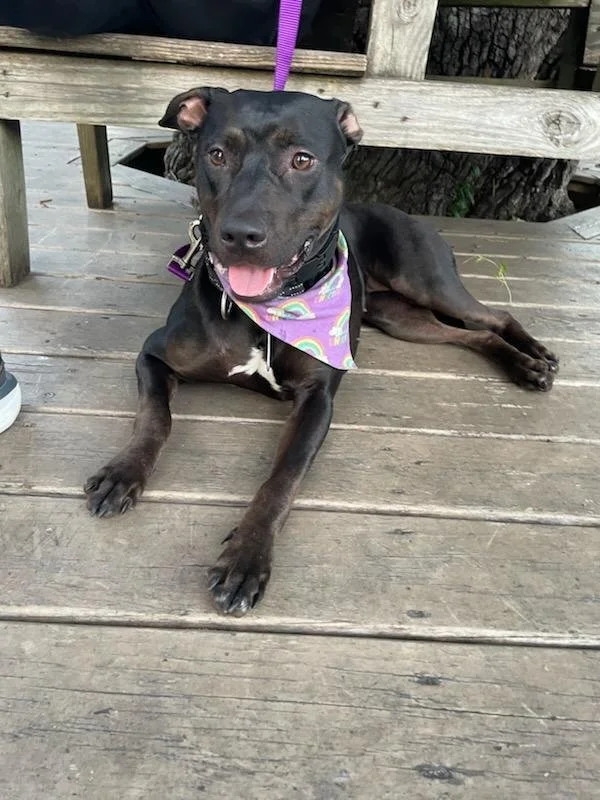
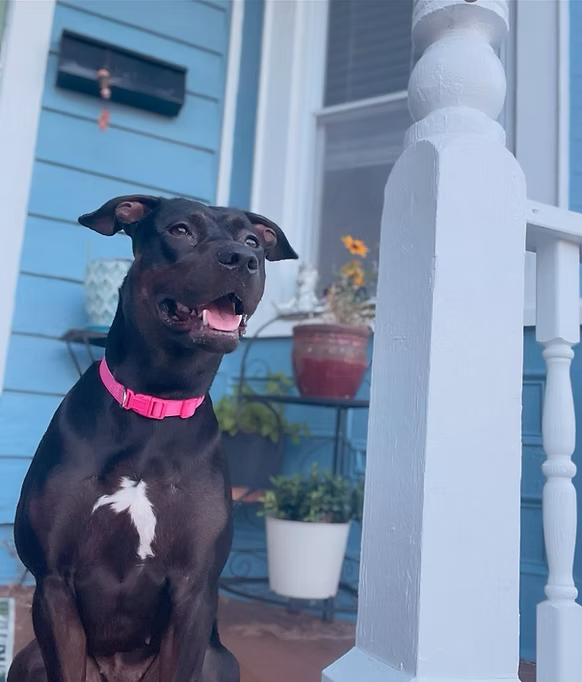
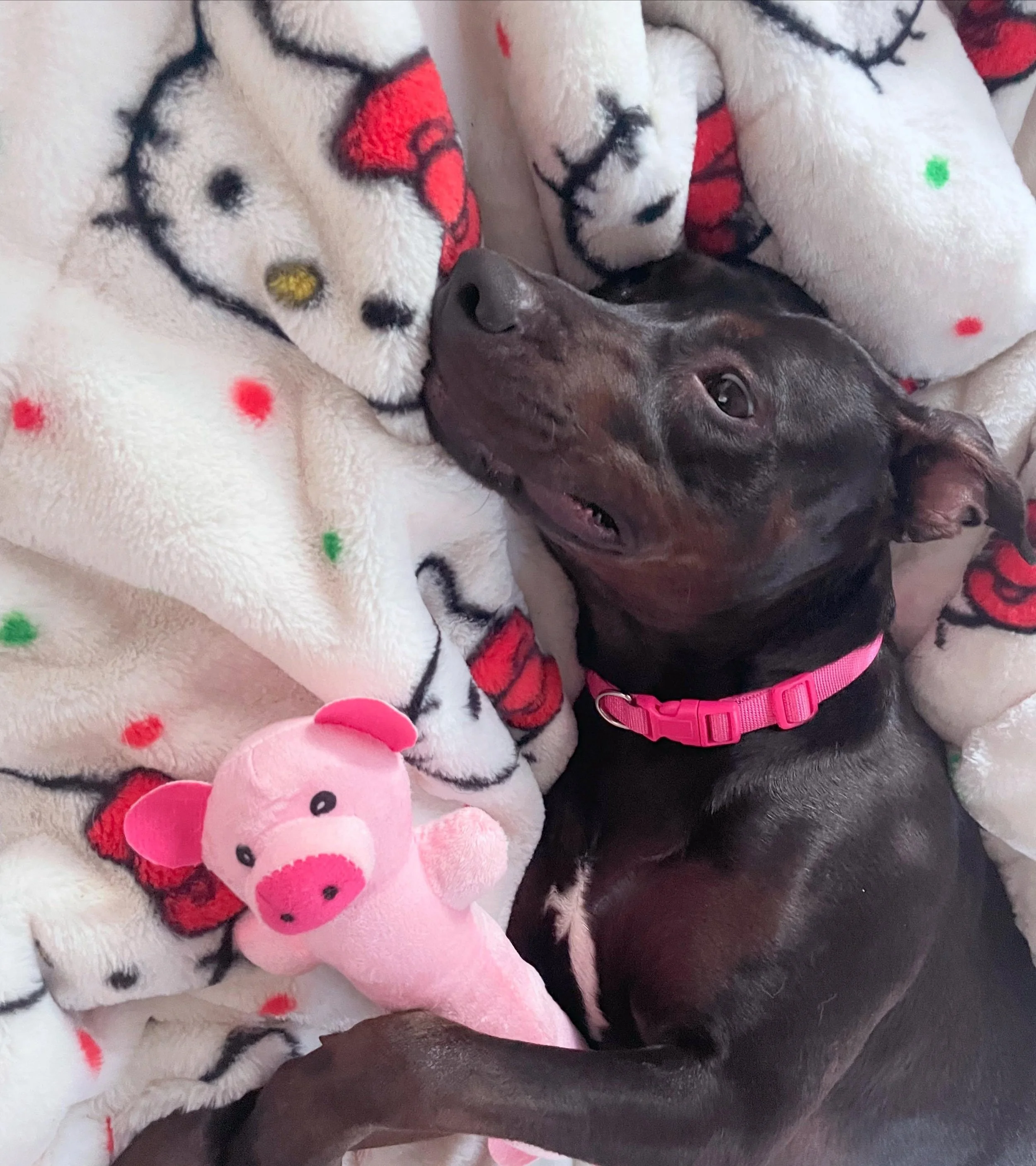
Location: Wilmington, North Carolina at Freedom Bridge Animal Rescue NC
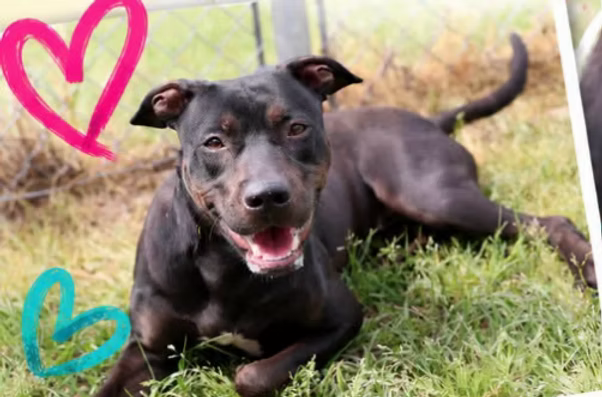
Breed: Labrador Retriever and American Staffordshire Terrier Mix
Age: Approximately 1 year old
Gender: Female
Weight: Approximately 46 lbs
How to Adopt Petunia
Petunia is available through Freedom Bridge Animal Rescue NC, a volunteer-run, foster-based rescue located in Wilmington, North Carolina.
View Petunia’s Petfinder Profile
Download the Adoption Application
Email: FreedomBridgeAnimalRescueNC@gmail.com
Phone: 843-614-0231
Location: Wilmington, North Carolina
Adoption Area: North Carolina only
Completed applications should be emailed to Freedom Bridge Animal Rescue. The rescue screens prospective adopters through veterinary-reference and home checks before placing a dog.
Approved families may receive assistance introducing Petunia to their home and resident animals. Freedom Bridge generally provides supplies for a one-week trial period before the adopter must make a permanent commitment. If a dog is still completing vaccinations or other veterinary care, the rescue may consider a foster-to-adopt arrangement while retaining ownership until the necessary care is finished.
Petunia’s adoption fee has recently been advertised as sponsored or waived during special adoption promotions. Applicants should confirm her current fee directly with the rescue when applying.
About Petunia
Petunia spent far too long watching people walk past her kennel.
At only around one year old, this petite 46-pound girl found herself living in a noisy shelter, surrounded by unfamiliar sounds, constant activity, and very little understanding of what would happen next.
She became one of the shelter’s longest-waiting female dogs. Day after day passed without someone choosing her, and the stress of kennel life began to take its toll.
Petunia was frightened, overwhelmed, and starting to shut down—but her difficult circumstances were not a reflection of the dog hiding underneath.
Fortunately, a shelter volunteer saw her fear and recognized that Petunia needed a quieter place where she could begin to feel safe. The volunteer offered to foster her if Freedom Bridge Animal Rescue would bring her into the organization.
Once the rescue met Petunia, the decision was easy.
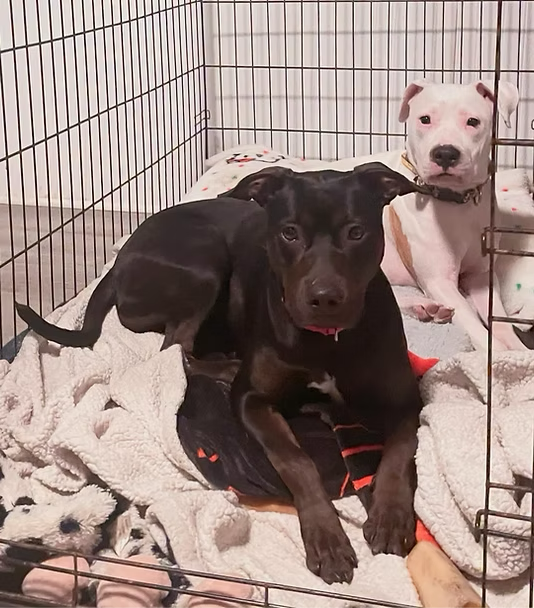
Petunia left the shelter and entered a foster home, where she is now discovering that life can include patient people, comfortable places to rest, canine friends, and affection that does not come with pressure.
Despite whatever she may have experienced before entering rescue, Petunia remains willing to trust.
She is shy and nervous when facing unfamiliar situations, but behind that uncertainty is an exceptionally sweet dog. Once Petunia decides that someone is safe, she transforms into an affectionate little love bug.
She is not looking for a person who expects instant confidence. She needs someone willing to earn her trust gently and give her the time she was never afforded in the shelter.
Characteristics
Sweet: Petunia’s foster family and rescue describe her as a remarkably sweet girl.
Affectionate: Once she trusts someone, Petunia becomes a loving companion who enjoys being close.
Initially Shy: She needs time to observe new people and decide that approaching them feels safe.
Sensitive: Loud, chaotic, or overly demanding environments may overwhelm her.
Resilient: Petunia experienced an extended and stressful shelter stay without losing her willingness to connect with people.
Athletic: She is a young, active dog who will benefit from regular exercise once she feels secure.
Playful: Her fun-loving personality emerges when she is comfortable.
Smart: Petunia can continue building confidence through patient, reward-based training.
House-Trained: She already understands an important part of living inside a home.
Crate-Trained: Petunia crates well and can use the space as a comfortable retreat.
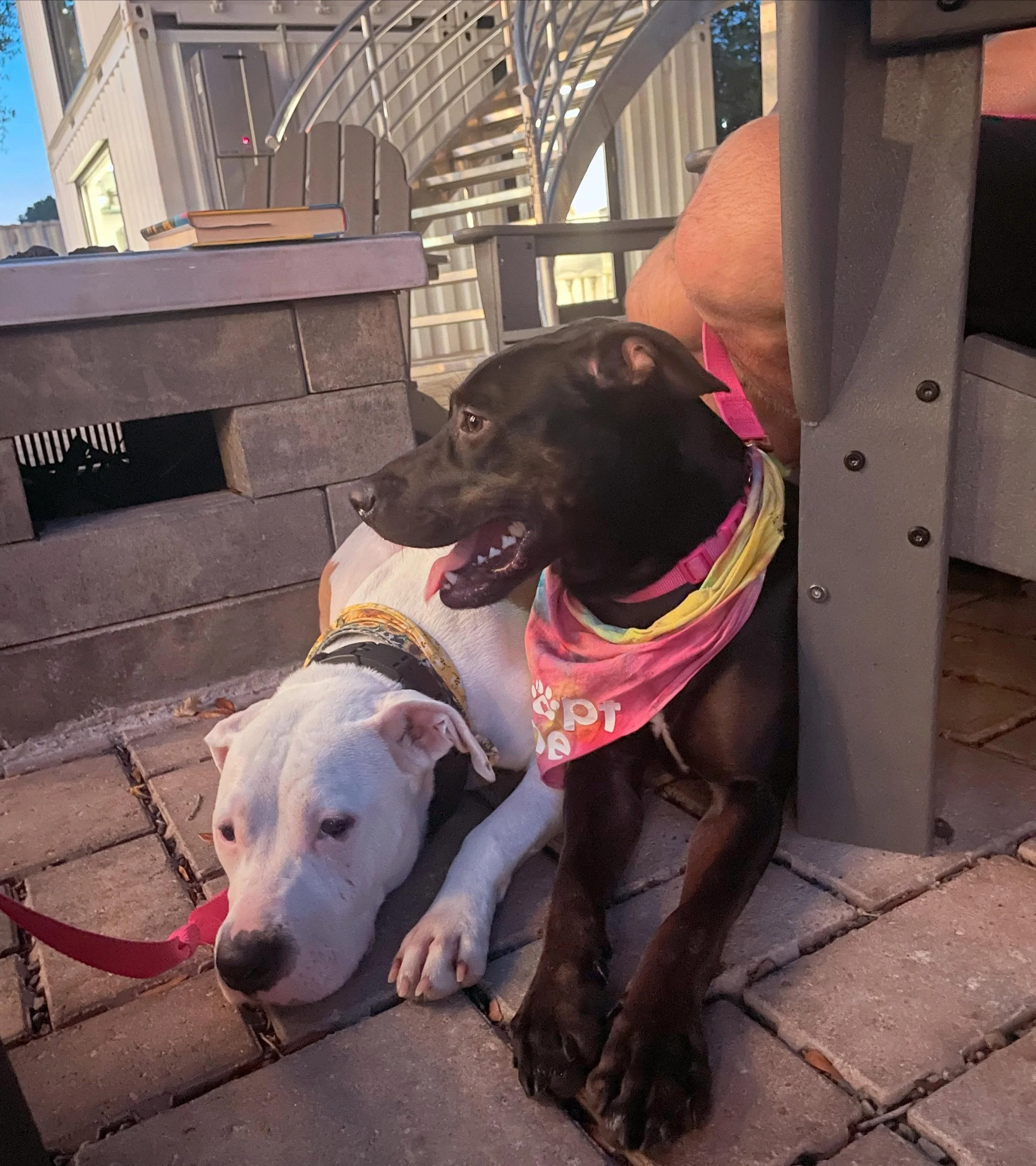
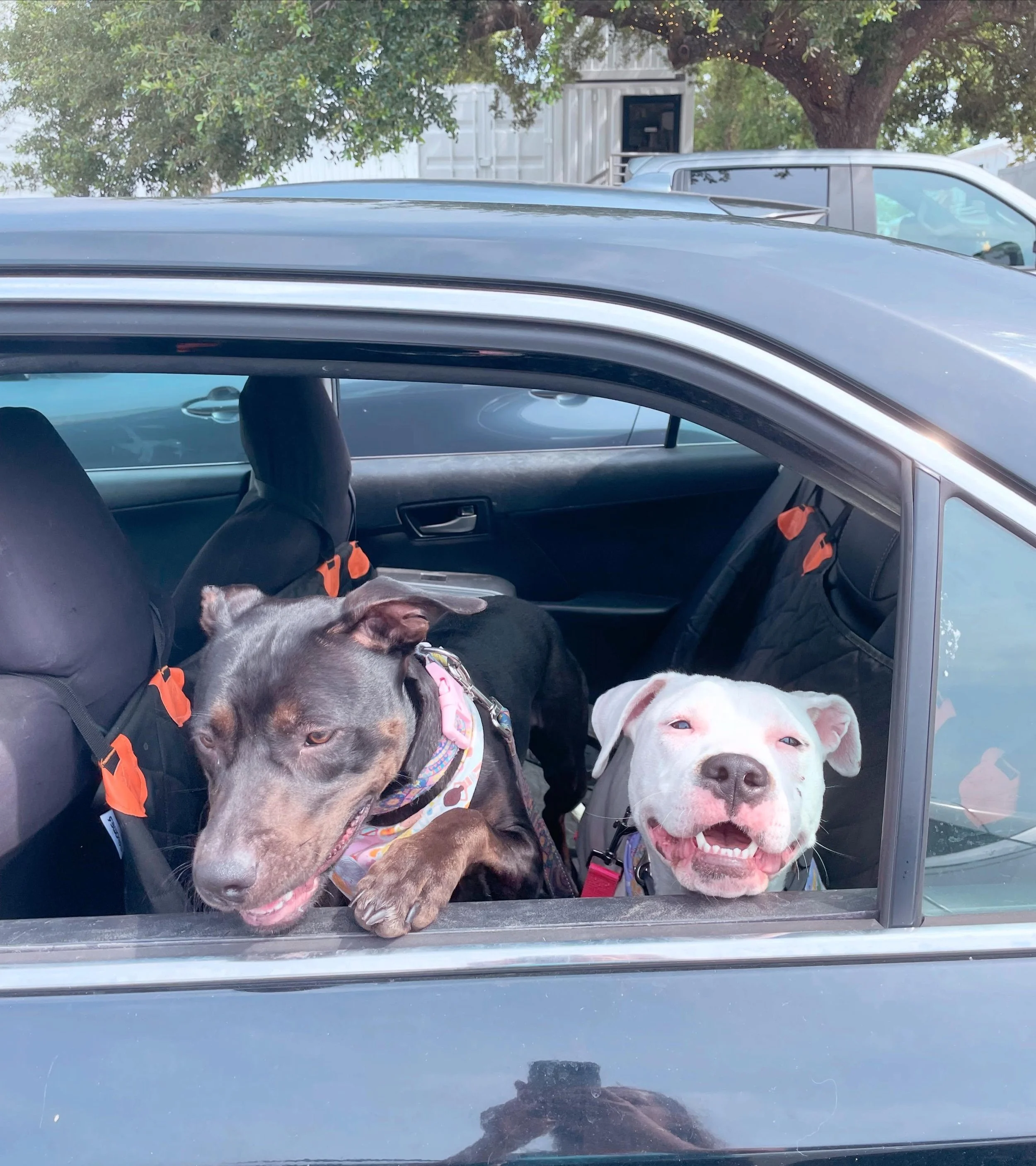
Dog-Friendly: She currently lives with canine foster siblings and benefits from their presence.
Companion-Oriented: Petunia would likely thrive with a calm, well-balanced dog who can help her feel more confident.
Heartworm-Negative: She tested negative for heartworm disease through the rescue’s veterinarian.
Learning That Life Can Be Good
Petunia entered foster care carrying the emotional weight of a long shelter stay.
Kennel stress can affect dogs in different ways. Some become restless or vocal, while others withdraw and try to make themselves as small as possible. A dog’s shelter behavior does not always represent how that dog will behave after settling into a stable home.
For Petunia, leaving the kennel gave her the opportunity to begin decompressing.
She is now living with foster siblings and experiencing a quieter, more predictable routine. Every positive interaction teaches her something important: people can be gentle, unfamiliar places do not always mean danger, and she does not have to face everything alone.
Her progress should continue at her pace.
Petunia should never be forced to interact, surrounded by strangers, or punished for feeling afraid. Her permanent family will need to recognize that trust is something she gives gradually—and that receiving it will be incredibly meaningful.
Helpful ways to build that trust may include:
Allowing Petunia to approach voluntarily
Sitting nearby without pressuring her
Speaking gently
Avoiding direct staring or reaching over her
Tossing treats rather than immediately hand-feeding
Taking quiet walks together
Keeping her daily routine predictable
Providing a comfortable retreat
Rewarding voluntary check-ins
Limiting visitors while she adjusts
Allowing her to rest without interruption
Introducing unfamiliar experiences gradually
Celebrating small signs of confidence
Petunia may initially seem hesitant, but patience will allow her affectionate personality to emerge naturally.
The Kind of Canine Companion Petunia Needs
Petunia would do best with another dog in the home to help increase her confidence.
A secure, socially appropriate dog can quietly demonstrate that new people, household sounds, walks, and daily routines are safe. Petunia may learn by watching the other dog approach family members, settle in unfamiliar situations, or explore something new.
However, she does not want to be overwhelmed by an overly energetic or physically pushy companion.
Petunia becomes nervous when another dog jumps all over her or ignores her requests for space. Her ideal canine sibling would be:
Calm and well-balanced
Socially appropriate
Confident without being forceful
Respectful of her personal space
Able to play gently
Comfortable taking breaks
Unlikely to guard food or toys
Patient during her adjustment
Similar in size or safely compatible
A reassuring presence rather than an additional source of stress
The rescue suggests that she may do well with a balanced male or female dog. The individual match matters more than gender, so any resident dog should meet Petunia under Freedom Bridge Animal Rescue’s guidance.
During the adjustment period, the dogs should have separate spaces for meals, treats, high-value chews, crates, sleep, and unsupervised time.
A canine companion can support Petunia’s confidence, but her human family must still develop their own relationship with her. She needs people who will patiently show her that they are trustworthy, too.
Training and Confidence Building
Petunia’s training should focus on creating safety, communication, and confidence.
Reward-based training can help her learn useful skills while strengthening her relationship with her adopter. Corrections, intimidation, leash jerks, or punishment for fearful behavior could increase her anxiety and make it more difficult for her to trust.
Helpful skills to practice may include:
Responding to her name
Voluntary eye contact
Touching a hand target
Coming when called
Loose-leash walking
“Wait”
“Leave it”
“Drop it”
Settling on a mat
Entering her crate voluntarily
Calm door and gate manners
Checking in during walks
Cooperative grooming
Comfortable harness handling
Relaxing when visitors are present
Moving away from stressful situations with her handler
Training sessions should remain short, predictable, and successful. Petunia should never be pushed beyond the point where she can comfortably eat treats, respond to cues, or engage with her person.
Her adopter should learn to recognize subtle signs of discomfort, including:
Turning her head away
Lip licking
Yawning when she is not tired
Freezing
Lowering her body
Tucking her tail
Avoiding eye contact
Refusing food
Attempting to move away
Panting when she is not hot
Becoming unusually still
Responding to these signals by reducing pressure will show Petunia that her communication is respected.
Exercise and Enrichment
Petunia is an active and athletic young dog, but her exercise routine should be introduced gradually as she adjusts to her new surroundings.
During her first days in a home, quiet walks and gentle exploration may be more beneficial than crowded outings or highly stimulating adventures.
As her confidence grows, she may enjoy:
Daily neighborhood walks
Sniffing walks
Exploring quiet trails
Backyard play
Fetch
Long-line adventures
Treat-searching games
Food puzzles
Snuffle mats
Stuffed enrichment toys
Learning new cues
Beginner nose work
Hide-and-seek
Gentle play with a compatible dog
Relaxing beside her family
Supervised exploration of new environments
Mental enrichment can help Petunia feel capable and curious without overwhelming her. Simple activities that allow her to use her nose and make choices may be especially valuable.
Busy dog parks would not be an appropriate way to exercise her. Uncontrolled dogs could frighten her, and a negative encounter may damage the confidence she is working so hard to build.
Her family should instead choose calm locations and carefully selected canine companions.
Using Her Crate as a Safe Space
Petunia crates well, giving her adopter a helpful tool during her transition.
Her crate can serve as:
A quiet sleeping area
A retreat when visitors arrive
A familiar space during household activity
A secure location during deliveries
A comfortable place for enrichment
A safe area while her family runs errands
A predictable part of her bedtime routine
A place where other animals will not disturb her
The crate should always remain positive. It should never be used to punish Petunia or force her to interact with something frightening.
Comfortable bedding, treats, appropriate chews, and stuffed toys can help her maintain a positive association with the space. Everyone in the household—including children and other pets—should leave her alone when she chooses to rest inside it.
Cats and Children
Petunia’s current compatibility with cats and children is unknown.
Families with cats should ask Freedom Bridge Animal Rescue whether she has received any supervised exposure to them while in foster care. A lack of documented experience does not automatically mean she cannot live with a cat, but it does mean applicants should not assume that the combination will be safe.
Families with children should discuss each child’s age, personality, and experience with shy dogs.
Because Petunia is sensitive and needs low-pressure interactions, any children in her home should be able to:
Approach her calmly
Avoid chasing or cornering her
Allow her to initiate affection
Avoid hugging or climbing on her
Leave her alone while she eats
Respect her crate and resting areas
Avoid taking toys from her mouth
Let her walk away when she needs space
Keep exterior doors and gates closed
Follow adult instructions around the dogs
All interactions should be supervised. A calm household with older, dog-savvy children may be easier for Petunia than a loud home with unpredictable activity, but the rescue should evaluate every family individually.
Helping Petunia Adjust
Moving into a permanent home will be another major change for Petunia, even though it will be a positive one.
Her family should keep her first few weeks intentionally quiet. She does not need to meet every relative, visit crowded stores, attend parties, or explore the entire neighborhood immediately.
A thoughtful transition may include:
Establishing consistent feeding times
Following a predictable bathroom schedule
Showing her where she will sleep
Introducing one room at a time
Keeping early walks short and quiet
Limiting visitors
Providing her crate as a retreat
Supervising interactions with resident dogs
Feeding animals separately
Offering appropriate toys and chews
Practicing easy cues she already understands
Giving her uninterrupted time to sleep
Avoiding crowded or noisy outings
Using secure walking equipment
Allowing her personality to emerge gradually
Petunia may initially hide, follow the resident dog closely, hesitate at doorways, sleep more than expected, or avoid direct interaction. These behaviors should not be treated as failures.
She has already experienced a world that felt frightening and unpredictable. Her adopter’s job will be to show her that this home is different.
Health and Vetting
Petunia is:
Spayed
Microchipped
Heartworm-negative
Approximately 46 pounds
House-trained
Crate-trained
In the process of completing her vaccinations
Living safely in a foster home
If Petunia has not completed every vaccination at the time an approved family is selected, Freedom Bridge may consider placing her through a foster-to-adopt arrangement. She would remain legally under the rescue’s ownership until all required veterinary care is finished.
Prospective adopters should request her complete veterinary records and confirm:
Which vaccines she has received
Whether any boosters remain due
Her current heartworm prevention
Her current flea and tick prevention
Her microchip-registration process
Whether she takes any medications
Her current food and feeding schedule
Her recommended healthy weight
When her next veterinary examination is due
Whether the rescue recommends any activity restrictions
Her permanent family should continue providing:
Annual veterinary examinations
Monthly heartworm prevention
Flea and tick prevention
Age-appropriate vaccinations
Balanced nutrition
Healthy weight management
Dental care
Nail and coat care
Regular exercise
Mental enrichment
Positive-reinforcement training
Prompt attention to changes in health or behavior
Ideal Home
Petunia is searching for a patient and compassionate family prepared to help a shy young dog continue discovering how good life can be.
Her ideal home will:
Give her time to build trust
Allow her to initiate affection
Provide a calm and predictable routine
Use positive-reinforcement training
Recognize and respect her body language
Avoid forcing her into frightening situations
Include a calm, compatible dog
Prevent overly rough canine interactions
Provide daily exercise and enrichment
Maintain her crate as a positive retreat
Introduce visitors gradually
Use secure walking equipment
Avoid uncontrolled dog-park interactions
Carefully discuss any cats or children with the rescue
Complete Freedom Bridge’s screening process
Reside within North Carolina
Maintain her preventative veterinary care
Commit to making her a permanent family member
Petunia spent too many days watching people pass her kennel without stopping.
She could not understand why she remained behind or why the world around her felt so loud and frightening. Still, she held onto a small but extraordinary willingness to trust.
Now, in foster care, that trust is beginning to grow.
Petunia is learning from her canine friends, relaxing into a safer routine, and showing the affectionate love bug that was hidden beneath her fear all along.
She does not need someone to rush her transformation. She needs someone who understands that every voluntary step closer, every relaxed nap, and every request for affection will be a victory.
For a patient family with a calm canine companion and room in their life for a sensitive, sweet, and resilient young dog, Petunia may become the most loyal kind of friend—the one who chose to trust them despite everything.
