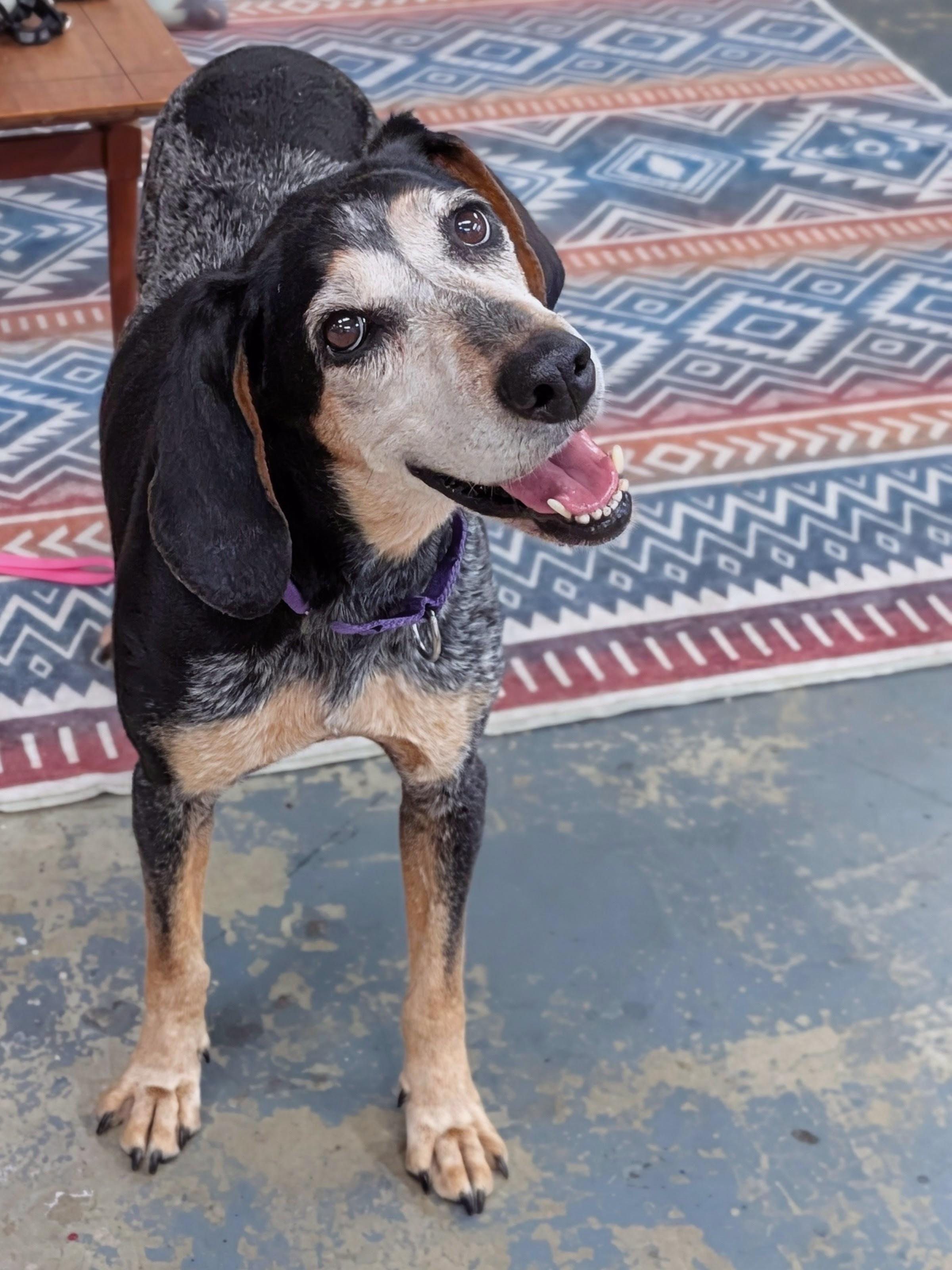
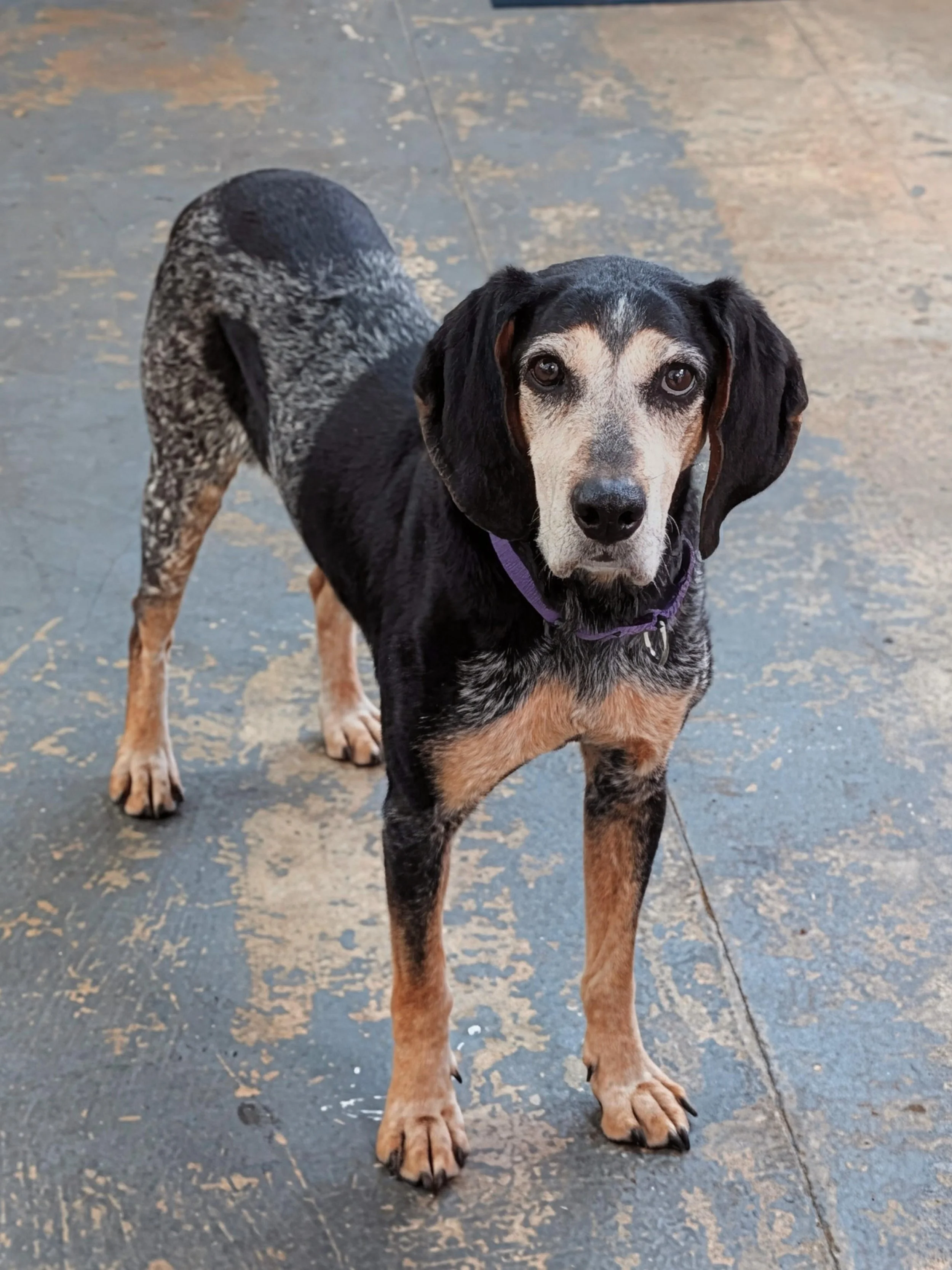
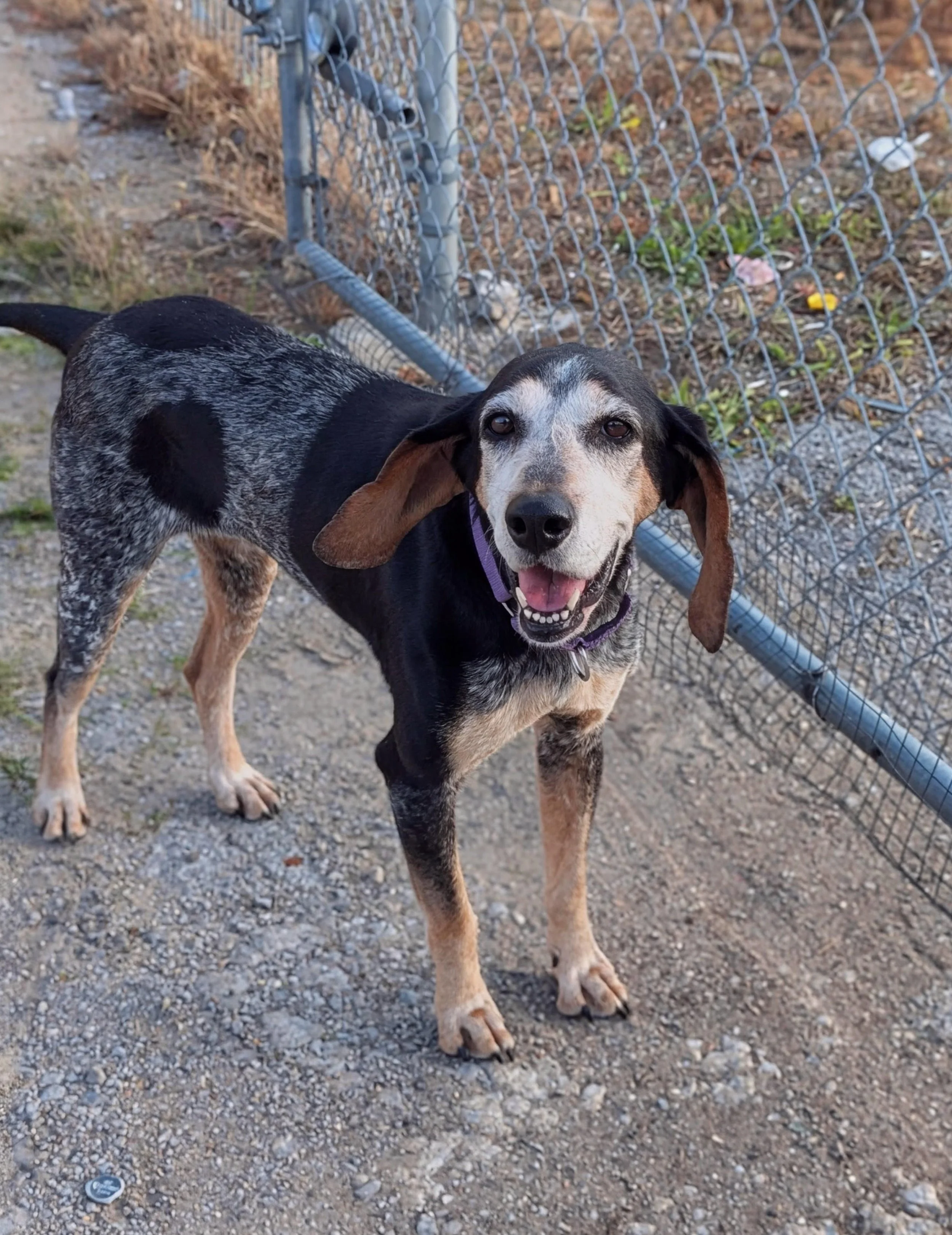
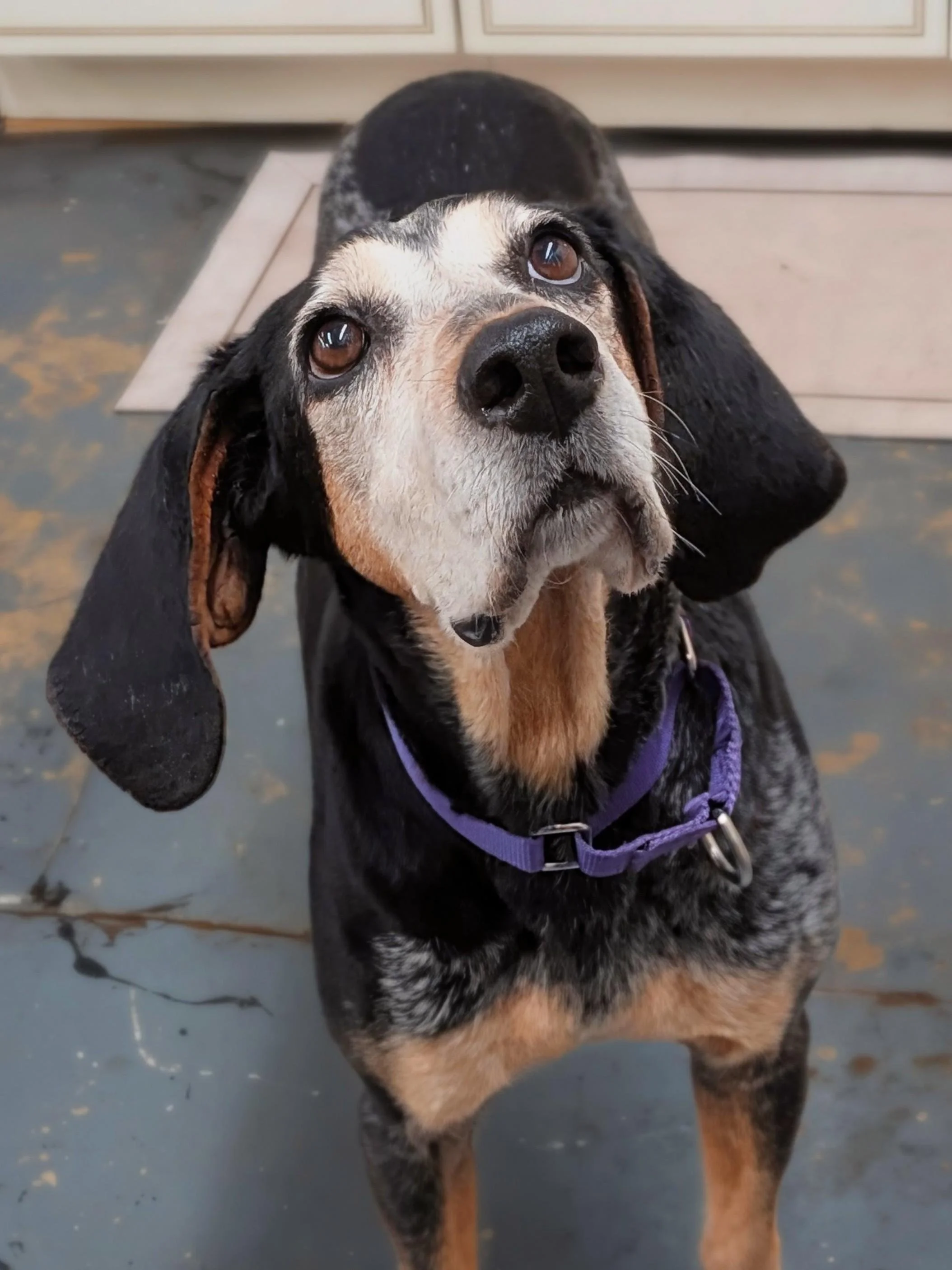
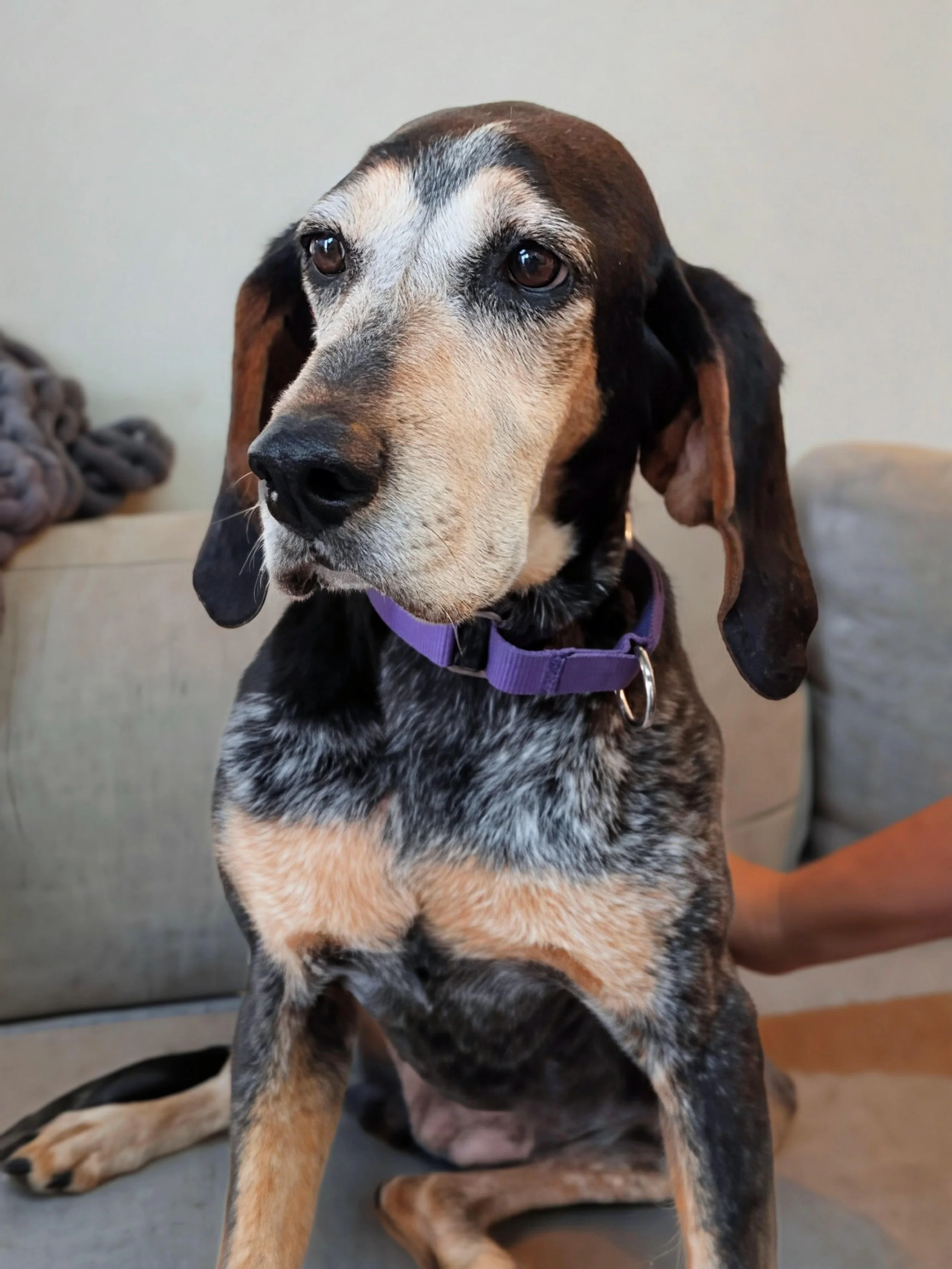
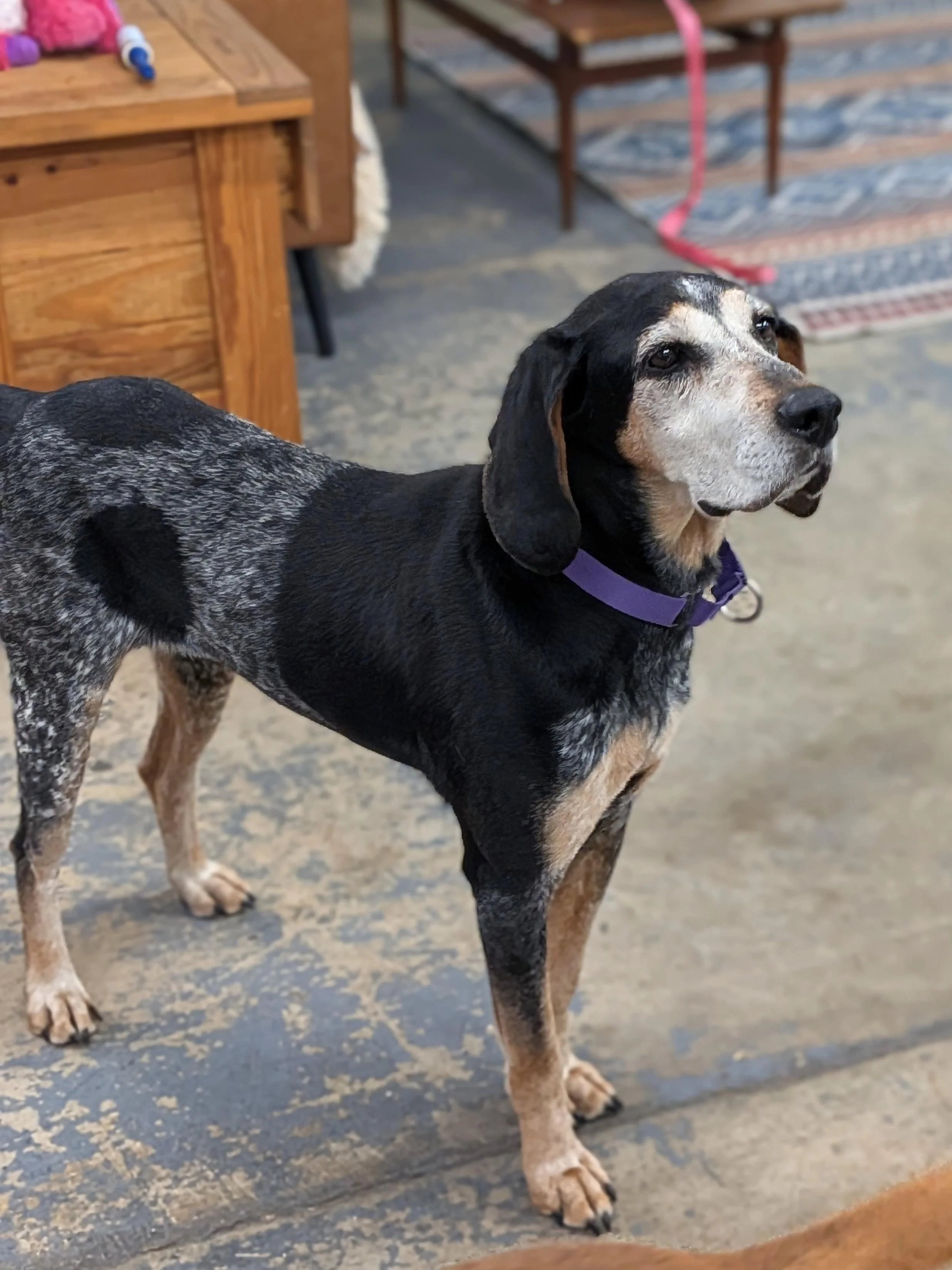
Location: Tulsa, Oklahoma at Helpless Hounds Dog Rescue
Breed: Bluetick Coonhound
Age: Approximately 7 years
Gender: Female
Size: Large
How to Adopt Abigail
Abigail—also called Abby—is being fostered in Tulsa, Oklahoma, through Helpless Hounds Dog Rescue. Her profile states that she may be adopted anywhere in the United States.
View Abigail’s Petfinder Profile
Complete the Adoption Application
View Helpless Hounds’ Adoption Information
Email: helplesshounds@gmail.com
Phone: 918-518-1167
Location: Tulsa, Oklahoma
Visits: By appointment only
Social Media: @helplesshounds
Helpless Hounds requires applicants to complete its adoption application and receive approval before meeting a dog. The rescue reviews veterinary records, checks personal references, and may contact landlords when applicable.
Adoptions are based on the best match rather than the order in which applications arrive. Helpless Hounds does not offer same-day adoptions or meet-and-greets before an applicant has been approved.
Abigail’s $350 adoption fee applies to dogs over one year old. A transportation fee may also apply depending on the adopter’s location. Prospective adopters should confirm her availability, transportation arrangements, medical records, and final adoption costs directly with the rescue. Helpless Hounds adoption information
About Abigail
Abigail is a beautiful seven-year-old Bluetick Coonhound who knows how to make herself at home—and how to make sure her people understand exactly what she wants.
Abby arrived at a rural shelter during a storm. She has since moved into a foster home in Tulsa, where it did not take long for her to settle into family life.
She even figured out how to use the bells hanging on the doors. When Abby decides it is time for a walk or car ride, she rings the front-door bell to notify her foster family.
Subtlety may not be her specialty, but communication certainly is.
Abby is described as a true people dog. She loves everyone she meets and happily cuddles with adults and older children. Once she is comfortable, she can fall asleep on the couch and begin snoring like she has always belonged there.
Her ideal day does not need to be complicated. A few walks, an extra car ride, time with her favorite people, and a comfortable couch for an afternoon nap may be all she needs to feel content.
Abby is crate-trained and continuing to work on house training. She can pull on the leash when excited, but she responds well to routine and needs someone who will give her consistent expectations.
She also becomes nervous during storms. Considering that she originally entered the shelter system during one, Abby’s discomfort is understandable. Her permanent family should allow her to remain safely indoors and offer patience, comfort, and a secure retreat whenever thunder begins.
Abigail needs to live without cats and would prefer to be the only dog in her home. She has successfully spent time with children ages 10 and older.
She is an affectionate, expressive hound who is remarkably easy to love. Abby is simply waiting for a home with enough room in its daily routine for cuddles, adventures, car rides, and plenty of couch naps. Abigail’s Petfinder profile
Characteristics
Affectionate: Abby loves being close to people and happily cuddles with the humans she trusts.
People-Oriented: She is described as a people dog through and through.
Friendly: Abigail loves meeting people and enjoys being part of family life.
Cuddly: She is perfectly content curling up beside someone on the couch.
Expressive: Abby makes her preferences clear, including ringing a bell when she wants to go outside.
Smart: She quickly learned how her foster family’s doorbell system works.
Communicative: Rather than waiting quietly, Abby lets her family know when she is ready for a walk or ride.
Car-Ride Enthusiast: She loves going for rides and would appreciate a family that includes her in appropriate outings.
Couch-Nap Expert: Abby is comfortable settling down for a long, peaceful nap.
Typical Hound: Her loud snoring and enthusiastic personality add to her Bluetick charm.
Crate-Trained: Abigail is already comfortable with an important household-management skill.
Learning House Training: She is making progress but will need patience and consistency in her permanent home.
Routine-Oriented: Abby settles well when someone establishes clear and predictable expectations.
Strong on Leash: She may pull when excited and will benefit from continued leash training.
Storm-Sensitive: Thunderstorms make her nervous, so she needs to remain safely indoors with appropriate support.
Older-Child Friendly: She has spent time with children ages 10 and older without problems.
Only-Dog Candidate: Her written profile says she would prefer to be the only dog in her home.
Not Cat-Friendly: Abigail should not be placed in a home with cats.
A People Dog Through and Through
Abigail’s greatest joy appears to be sharing life with people.
She does not need constant excitement or an elaborate schedule. What matters most is having dependable humans nearby and being included in their routine.
She may enjoy:
Relaxing beside her family
Cuddling on the couch
Taking leisurely car rides
Going on daily walks
Participating in short training sessions
Following her people around the house
Sniffing around the neighborhood
Sleeping near her favorite person
Greeting familiar visitors
Exploring quiet, dog-friendly places
Enjoying food puzzles and treats
Settling down for an impressive hound nap
Abby’s ability to relax in her foster home is encouraging. Falling asleep deeply enough to snore suggests that she can become comfortable when she feels safe.
Her permanent family should give her the same opportunity. A predictable schedule, comfortable resting area, gentle guidance, and plenty of companionship can help her settle into a new home.
Her Love of Car Rides
Some dogs tolerate riding in the car. Abigail actively requests it.
Her bell-ringing habit makes it clear that a car ride can be one of the highlights of her day. She may be a wonderful companion for someone who enjoys bringing their dog along on appropriate outings.
Car trips should always be managed safely. Abigail should ride using a secured crate or crash-tested canine restraint rather than moving freely around the vehicle.
Her family should also:
Keep her identification tags current
Confirm that her microchip information is registered
Never leave her unattended in a hot or cold vehicle
Bring water on longer trips
Use a leash before opening the door
Avoid allowing her to place her entire head outside a moving vehicle
Plan breaks during longer journeys
Make sure destinations permit dogs
Keep her away from unsecured cargo
Watch for signs of stress or motion sickness
Because Abby is available to adopters throughout the country, she may need to travel a considerable distance to reach her permanent home. Applicants should ask Helpless Hounds whether transportation is coordinated by the rescue, the adopter, or a third-party service.
House Training
Abigail is still working on her house training.
Moving between a rural shelter and foster home may have interrupted her routine. She may also need time to learn the schedule, exits, surfaces, and expectations in a different house.
Her ability to ring a bell when she wants a walk is a promising sign. She already understands that the bell produces a response from her people, and her adopter may be able to incorporate this skill into a consistent bathroom routine.
Helpful house-training practices include:
Taking her outside immediately after waking
Providing bathroom breaks after meals
Taking her out after playtime
Offering a final bathroom break before bed
Using the same exterior door
Visiting the same bathroom area initially
Rewarding her immediately after she goes outside
Supervising her closely indoors
Using her crate appropriately when supervision is impossible
Learning her signals
Cleaning accidents with an enzymatic cleaner
Avoiding punishment
Keeping a written schedule during the adjustment period
Abby should not be scolded for an accident discovered after it occurs. Punishment will not explain where she should have gone and could make her reluctant to eliminate in front of her family.
Consistency, supervision, and immediate rewards will communicate the expectation more effectively.
Crate Training
Abigail is already crate-trained.
A crate can provide her with a secure resting place, help support house training, and keep her safe during brief periods when direct supervision is unavailable.
Her crate should remain a positive environment rather than a place of punishment. It should be large enough for her to stand, turn around, stretch, and lie down comfortably.
Her family can maintain that positive association by:
Providing comfortable bedding if she does not chew it
Offering meals or treats inside
Giving her a safe enrichment toy
Leaving the door open when confinement is unnecessary
Keeping the crate in a comfortable part of the home
Allowing her to rest without interruption
Avoiding excessive periods of confinement
Never using the crate as punishment
Making sure children do not enter or disturb it
Removing collars or equipment that could become caught
Because Abby loves human companionship, crate time should not replace exercise, affection, training, or inclusion in family life.
Training
Abigail is intelligent and has already demonstrated her ability to learn household systems.
She will benefit from positive-reinforcement training that rewards the behaviors her family wants to see. Clear routines will be especially valuable because her profile notes that she settles once someone establishes consistency.
Helpful skills to practice may include:
Responding to her name
Coming when called
Loose-leash walking
Checking in with her handler
“Sit”
“Down”
“Wait”
“Leave it”
“Drop it”
Door and gate manners
Waiting before exiting the car
Settling on a mat
Entering her crate voluntarily
Remaining calm while her leash is attached
Waiting before meals
Cooperative grooming
Relaxing when visitors arrive
Using her doorbell for bathroom breaks
Training sessions should remain short, clear, and enjoyable. Abby does not need harsh corrections. Rewards such as food, praise, affection, or an opportunity to go for a walk can help her understand which choices work.
Her family should decide how the doorbell will be used. If Abby learns that ringing it always results in a recreational outing, she may ring it frequently. Her adopter can create different cues for bathroom breaks, walks, and car rides while still appreciating her wonderfully direct communication style.
Leash Skills
Abigail may pull on the leash when she becomes excited.
Her permanent family should be physically comfortable managing a large hound while patiently reinforcing better walking habits.
A secure, properly fitted harness may provide additional control. Helpless Hounds can explain what equipment Abby currently uses and whether the rescue has specific recommendations.
Leash training may include rewarding her for:
Standing calmly while her harness is attached
Remaining near her handler
Walking while the leash is loose
Checking in voluntarily
Stopping when her handler stops
Following changes in direction
Waiting before leaving the house
Moving away from distractions
Refocusing when offered a reward
Walking calmly back toward the home or car
Bluetick Coonhounds were developed to follow scent trails. Interesting smells may therefore compete strongly for Abby’s attention.
Rather than preventing her from sniffing entirely, her family can use sniffing as a reward. After walking politely for a short distance, Abby can be released with a cue to explore an appropriate area.
She should remain leashed or inside a securely fenced space outdoors. A hound following an exciting scent can travel farther than expected and may not immediately respond to a recall cue.
Exercise and Enrichment
At approximately seven years old, Abigail is an adult dog who still needs daily exercise, mental stimulation, and opportunities to explore.
Her routine might include:
Daily neighborhood walks
Sniff-focused walks
Car rides
Long-line exploration in safe areas
Food puzzles
Treat searches
Snuffle mats
Stuffed enrichment toys
Scent games
Hide-and-seek
Short training sessions
Appropriate chew items
Exploring quiet trails
Backyard sniffing in a secure enclosure
Relaxing with her family
Plenty of couch naps
Scent-based activities may be particularly fulfilling for a Bluetick Coonhound. Hiding treats around a room, placing food in a snuffle mat, or teaching simple nose-work games can give Abby a healthy outlet for her natural abilities.
A fenced yard could be useful, but it should not replace walks and companionship. Fencing should be checked carefully for gaps, weak gates, or places where a determined hound could climb or dig.
Her adopter should ask about her current activity level and any medical restrictions before beginning a new exercise program.
Helping Abigail Through Storms
Abigail becomes nervous during storms.
Storm anxiety can involve more than a dislike of loud thunder. Dogs may react to changes in air pressure, flashes of lightning, wind, static electricity, or sounds that humans cannot hear as clearly.
Possible signs of storm-related distress include:
Panting
Pacing
Trembling
Hiding
Following a person closely
Attempting to climb onto furniture or people
Refusing food
Vocalizing
Drooling
Scratching at doors
Trying to escape
Becoming unable to settle
Her permanent family should always allow her to remain safely indoors during storms. Abby should never be left outdoors to “get used to” thunder.
Helpful support may include:
Preparing a quiet interior room
Closing blinds or curtains
Using a fan, television, or white noise
Giving her access to her crate if she finds it comforting
Allowing her to stay near a trusted person
Offering a food toy before the storm intensifies
Remaining calm and predictable
Securing doors and windows
Taking her outside before severe weather arrives
Keeping identification on her
Discussing significant anxiety with a veterinarian
Comforting a frightened dog does not reinforce fear in the same way that rewarding a voluntary behavior does. If Abby seeks quiet reassurance, her family can support her without forcing physical contact.
For severe anxiety, a veterinarian may recommend a behavior plan, medication, or consultation with a qualified behavior professional.
Life as the Only Dog
Petfinder’s compatibility field identifies Abigail as good with dogs, but her current written description says she prefers to be the only dog in the home.
The more specific written guidance should be followed unless Helpless Hounds provides updated information. Dog-friendly behavior in certain settings does not necessarily mean that a dog wants to share her home, people, food, toys, and resting areas with another dog.
Applicants should ask the rescue:
Whether being the only dog is a firm requirement
How she behaves when seeing dogs on walks
Whether she has lived with another dog
Whether she enjoys brief social interactions
Whether she guards food, toys, beds, or people
What caused the rescue to recommend a one-dog home
How her adopter should manage encounters with unfamiliar dogs
Even if Abby can politely pass or briefly greet other dogs, she may be happiest receiving her family’s undivided attention.
She should not be taken to crowded dog parks as a test of sociability. Her adopter can instead choose quiet walks and maintain enough distance for her to remain comfortable.
Life with Cats and Other Animals
Abigail is not compatible with cats and should be placed in a cat-free home.
This requirement should include indoor cats as well as cats who spend time outdoors on the property. Her family should also discuss rabbits, guinea pigs, birds, poultry, and other small animals with Helpless Hounds before applying.
As a scent hound, Abby may become strongly interested in smaller animals. Careful leash management and secure fencing will help protect her and the animals around her.
She should never be allowed to chase a cat as a way of testing whether they can coexist.
Life with Children
Abigail has spent time with children ages 10 and older without any reported problems.
Her affectionate personality may make her a loving companion for a family with respectful older children. Applicants should still discuss every child’s age, behavior, and experience with dogs directly with the rescue.
Children living with Abby should understand how to:
Approach her calmly
Avoid hugging or climbing on her
Leave her alone while she eats
Respect her crate and sleeping areas
Avoid taking objects from her mouth
Allow her to walk away
Keep exterior doors and gates closed
Avoid disturbing her during storms
Participate appropriately in training
Ask an adult before giving her food
Remain calm while she is leashed
Avoid encouraging pulling or jumping
All interactions between dogs and children should be supervised.
Because Abby is a large dog who may pull when excited, children should not be responsible for walking her without an adult capable of maintaining control.
Helping Abigail Adjust
Moving from foster care into a permanent home will bring changes to Abigail’s surroundings, routine, and relationships.
Even a friendly dog may need time to understand where to sleep, when meals arrive, which door leads outside, and whether the new people around her can be trusted.
A thoughtful transition may include:
Maintaining her current food initially
Following her foster family’s schedule
Establishing regular bathroom breaks
Showing her where she will sleep
Setting up her crate before she arrives
Introducing the home gradually
Keeping early walks quiet
Limiting visitors
Avoiding interactions with unfamiliar dogs
Keeping her separated from cats
Providing appropriate toys and chews
Offering plenty of rest
Practicing simple cues
Using secure walking equipment
Keeping doors and gates closed
Preparing for possible storms
Allowing her personality to emerge naturally
Abby may initially have house-training accidents, pull more strongly than usual, follow one person closely, sleep frequently, or need help settling.
These behaviors do not necessarily predict how she will behave after learning the routine. Her foster experience already shows that she can make herself comfortable and become a loving part of a household.
Health and Veterinary Care
Abigail is currently listed as:
Approximately seven years old
A Bluetick Coonhound
Female
Large
Spayed
Crate-trained
Working on house training
Available for adoption
Adoptable throughout the United States
Prospective adopters should request her complete veterinary records and confirm:
Her estimated date of birth
Her current weight
Her vaccination history
Her heartworm-testing history
Her current heartworm prevention
Her flea and tick prevention
Whether she is microchipped
Whether she takes medication
Whether she has any allergies
Whether she has any chronic health conditions
Her current food and feeding schedule
Her dental health
Her mobility and joint health
Whether she has any exercise restrictions
When her next veterinary examination is due
Whether her storm anxiety has required medication
What house-training routine her foster uses
Her permanent family should continue providing:
Routine veterinary examinations
Recommended vaccinations
Monthly parasite prevention
Balanced nutrition
Healthy weight management
Dental care
Nail and coat care
Appropriate exercise
Mental enrichment
Positive-reinforcement training
Prompt attention to physical or behavioral changes
Ideal Home
Abigail is searching for a loving family ready to welcome an affectionate hound who communicates clearly and embraces life’s simple pleasures.
Her ideal home will:
Make her the only dog
Have no cats
Include adults or respectful children ages 10 and older
Appreciate her affectionate nature
Welcome her onto the couch for naps
Enjoy taking her on car rides
Provide daily walks
Continue her leash training
Help her complete her house training
Maintain a predictable routine
Use positive-reinforcement methods
Provide scent-based enrichment
Keep her safely leashed outdoors
Have secure fencing if a yard is available
Allow her to remain indoors during storms
Provide a quiet retreat when thunder begins
Continue using her crate positively
Include her in everyday family life
Provide routine veterinary care
Commit to making her a permanent family member
Abigail has already shown that she knows how to become part of a home.
She learned the doorbell system, claimed a comfortable spot on the couch, shared cuddles with adults and older children, and made sure everyone understood when she was ready for her next walk or car ride.
She is not asking for perfection.
Abby needs consistency while she completes her house training, patient guidance when excitement causes her to pull, protection and reassurance during storms, and a home where she can be the only pet receiving her family’s love.
In return, her adopter will gain an expressive, affectionate companion who fills ordinary days with car rides, cuddles, unmistakable requests, and the unforgettable sound of a Bluetick Coonhound snoring happily on the couch.
