
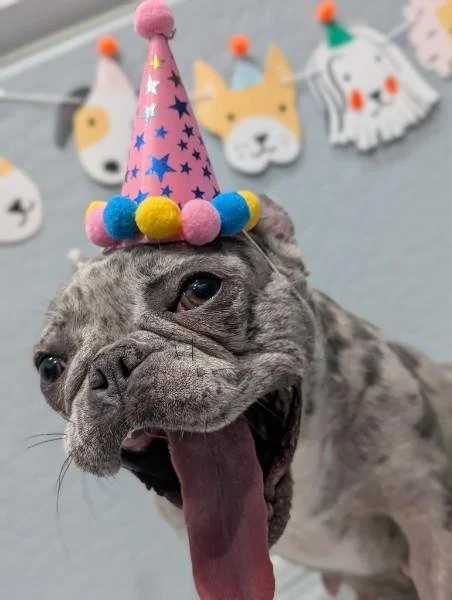
Location: Phoenix, Arizona at The Disco Dog Club
Breed: French Bulldog
Age: Approximately 4–5 years
Gender: Female
Weight: Approximately 23 pounds
Size: Small
How to Adopt Ekko
Ekko is available through The Disco Dog Club, a foster-based rescue serving Arizona’s Phoenix metro and Casa Grande areas.
Complete the Adoption Application
View The Disco Dog Club’s Adoptable Dogs
Email: info@thediscodogclub.org
Instagram: @thediscodogclub
Location: Phoenix Metro and Casa Grande, Arizona
Facility: Foster-based rescue; dogs live in foster homes rather than a public shelter
The rescue’s website currently lists Ekko among its adoptable dogs, but portions of her profile also indicate that she may still be completing medical care. Prospective adopters should contact The Disco Dog Club to confirm whether applications are currently being accepted for her.
The adoption process includes an application review, meet-and-greet, home visit, final approval, adoption contract, and payment of the adoption fee. Applications are generally reviewed within two to three business days.
About Ekko
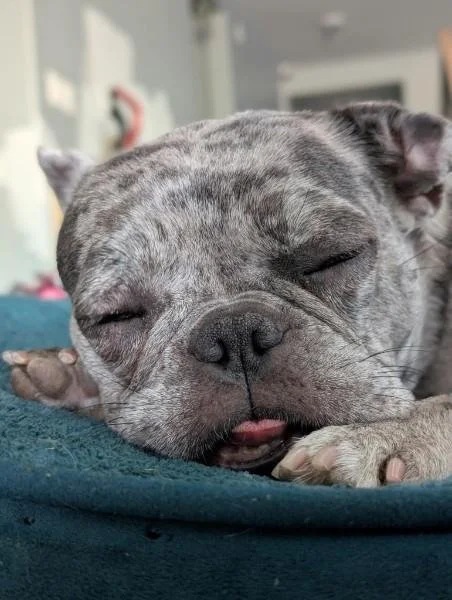
Ekko is a sweet and spunky French Bulldog whose affectionate personality has survived an incredibly difficult beginning.
She entered a Las Vegas shelter after being surrendered by her previous owner. When rescuers found her, she had a fresh C-section scar that still required stitch removal. Her condition suggested that she may have previously been used for breeding without receiving the consistent care she deserved.
Despite those experiences, Ekko remains loving, playful, and eager to form meaningful relationships with people.
She can be shy when first meeting someone, but patience and kindness help her feel secure. Once Ekko decides that a person is safe, she warms up quickly and develops a strong attachment.
Affection is extremely important to her. She wants to be close to the people she trusts and promises plenty of loyalty, cuddles, and unmistakable French Bulldog personality.
Ekko also has a wonderfully playful side. She enjoys wrestling with her foster siblings and participating in the fun around her. Although she can live successfully around other dogs, unfamiliar dogs may initially make her nervous. Slow, thoughtful introductions are necessary.
At approximately 23 pounds, Ekko is compact, but she comes with significant personality and some ongoing care needs.
Years of untreated ear infections caused scar tissue to build up inside her ears. She has been receiving medication and requires regular ear cleaning and maintenance in hopes of preventing surgery.
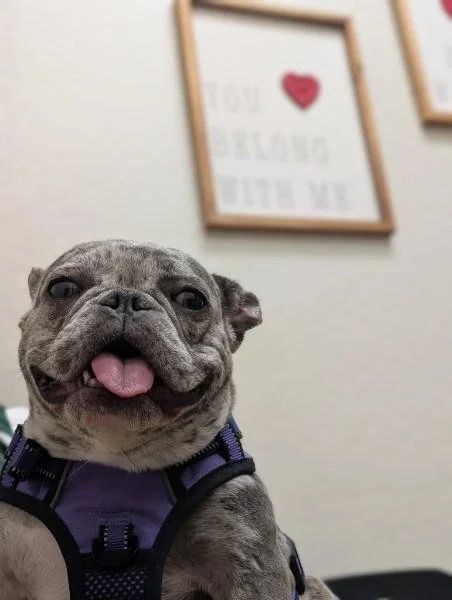
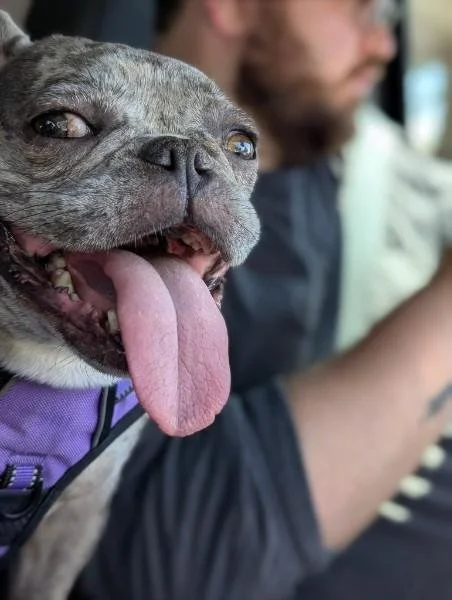
Her lower front teeth are also significantly worn. Because of this, her tongue sometimes sticks out in an adorable little “tongue blip.” She remains a good eater, although she uses her tongue more than her teeth and may take slightly longer to finish meals.
Ekko is mostly potty trained and is continuing to learn that her crate can be a safe, comfortable place. She experiences some separation anxiety, so her foster family has been working on crate training for nighttime and periods when no one is home.
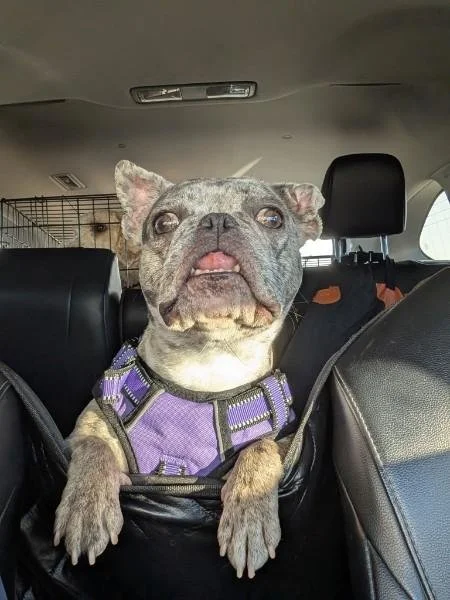
She does well on a leash, rides nicely in the car, and tolerates grooming. These qualities may make everyday care and appropriate outings easier for her permanent family.
Ekko needs an adopter who understands that welcoming her home means committing to her emotional recovery as well as her physical care. In return, she will offer affection, loyalty, playfulness, and the joy of watching a deserving dog discover how wonderful life can be.
Characteristics
Affectionate: Ekko loves attention and forms close bonds with people who treat her kindly.
Sweet: Her difficult past has not taken away her gentle and loving spirit.
Resilient: Ekko has endured neglect, repeated breeding, medical problems, and a shelter surrender while continuing to trust people.
Playful: She enjoys wrestling and playing with her foster siblings.
Spunky: Ekko has a lively personality and plenty of classic French Bulldog charm.
Initially Shy: She may need time before feeling comfortable around an unfamiliar person.
Loyal: Once she trusts someone, she becomes deeply attached.
Dog-Friendly: Ekko enjoys other dogs after careful introductions.
Nervous Around Unfamiliar Dogs: New canine relationships should develop gradually rather than being rushed.
Child-Friendly: Her rescue identifies her as friendly with children, although applicants should discuss their children’s ages directly with the rescue.
Good in the Car: Ekko can accompany her family on appropriate outings.
Good on Leash: She reportedly handles leash walks well.
Tolerant of Grooming: She cooperates with grooming, which is especially helpful considering her ongoing maintenance needs.
Mostly Potty Trained: Ekko has made good progress but may need reminders while adjusting to a new home.
Learning Crate Training: Her foster family is helping her view the crate as a safe resting area.
Experiences Separation Anxiety: She needs patient, gradual support when learning to spend time alone.
Special-Care Dog: Her ears and teeth require continued veterinary monitoring and home care.
Good Eater: Although her teeth are worn, she continues to eat successfully.
A Resilient Survivor
Ekko’s physical condition tells part of the story of what she experienced before entering rescue.
Her fresh C-section scar suggested that she had recently given birth, and the rescue believes that she may have been used for breeding. Her damaged ears and worn teeth indicate that important health concerns may have remained untreated for a considerable time.
Ekko cannot explain what happened to her, but her family can make certain that her future looks completely different from her past.
She needs a home built around:
Consistent veterinary care
Gentle handling
Predictable routines
Patient introductions
Positive-reinforcement training
Regular ear maintenance
Appropriate dental monitoring
Time to form trust
Safe opportunities to play
Gradual separation training
Comfortable places to rest
A permanent commitment
Her history may influence how she responds to unfamiliar people, handling, confinement, or changes in routine. Her adopter should pay attention to her body language and allow trust to develop at her pace.
Ekko should never again be valued for what she can produce. She deserves to be treasured simply because she is Ekko.
Ear Care
Ekko’s ears have developed extensive scar tissue following years of untreated infections.
She is currently receiving medication and requires regular cleaning and maintenance. The rescue hopes this ongoing care will prevent her from eventually needing surgery, but her permanent family should be prepared for future veterinary expenses if her condition changes.
Prospective adopters should ask:
What medication she currently receives
How frequently her ears need cleaning
Which cleaning solution her veterinarian recommends
Whether she resists any part of the process
What organisms caused her previous infections
Whether cultures or diagnostic testing were performed
Whether allergies may contribute to her ear problems
How much hearing she currently has
Whether surgery may eventually become necessary
Which symptoms require an immediate veterinary appointment
Possible warning signs of another ear infection may include head shaking, scratching, redness, swelling, odor, discharge, pain, or suddenly resisting touch near the ears.
Because Ekko tolerates grooming well, she may cooperate with regular maintenance once a gentle routine is established. Cleaning should still follow her veterinarian’s instructions, as excessive or improper cleaning can irritate sensitive ears.
Dental Needs and Her Signature Tongue Blip
Ekko’s lower front teeth are significantly worn down.
The damage makes it difficult for her to keep her tongue completely inside her mouth, resulting in the tiny tongue “blip” that adds to her distinctive appearance.
She remains a good eater, but her tongue performs more of the work that her teeth would normally do. This means she may need additional time to finish a meal.
Her adopter should ask the rescue and veterinarian:
Whether dental X-rays have been taken
Whether damaged teeth need treatment or extraction
Whether she experiences any oral pain
What type of food she currently eats
Whether her food should be softened
Whether she can safely chew hard treats or toys
How frequently she needs dental examinations
Whether additional dental work is anticipated
How to keep her mouth clean safely
Whether her tongue requires any special care
Any future changes in appetite, chewing ability, drooling, facial swelling, mouth odor, or pawing at the face should be discussed with a veterinarian.
Feeding Ekko
Ekko can eat successfully despite her dental problems, but she may finish more slowly than another dog.
When living with other dogs, she should be fed separately. A peaceful feeding space will give her enough time to eat without another dog approaching her bowl or creating pressure.
Separate feeding may include:
Using different rooms
Closing a door or baby gate
Picking up every bowl afterward
Avoiding shared high-value treats
Supervising until every dog finishes
Following her veterinarian’s food recommendations
Monitoring her weight and appetite
Providing plenty of fresh water
Her family should not assume that slow eating means she is being difficult. Her mouth simply works differently, and she deserves enough time to eat comfortably.
Crate Training and Separation Anxiety
Ekko is learning to view her crate as a safe space for nighttime sleeping and brief periods when her family is away.
Because she experiences some separation anxiety, crate training should proceed gradually. A crate alone does not cure anxiety, and forcing a distressed dog to remain confined can make the fear worse.
Helpful steps may include:
Feeding her near or inside the crate
Leaving the door open during relaxed periods
Providing comfortable bedding when safe
Offering a special enrichment toy
Practicing very brief departures
Returning before she becomes overwhelmed
Keeping arrivals and departures calm
Using a camera to monitor her behavior
Increasing alone time gradually
Maintaining a predictable schedule
Avoiding punishment for anxious behavior
Consulting a veterinarian if distress is significant
Her adopter should ask her foster family what happens when Ekko is left alone. Vocalizing briefly is different from panicking, attempting to escape, drooling excessively, eliminating, or injuring herself.
A veterinarian or qualified behavior professional may be needed if her anxiety remains severe.
Potty Training
Ekko is described as mostly potty trained.
Even a dog who has made excellent progress may experience accidents after moving into an unfamiliar home. New doors, smells, schedules, people, and surfaces can temporarily interrupt established habits.
Her family can support her by:
Taking her outside immediately after waking
Providing bathroom breaks after meals
Taking her out following play and naps
Offering a final trip outside before bed
Using the same exterior door initially
Rewarding her immediately after she goes
Supervising her closely indoors
Learning her signals
Cleaning accidents with an enzymatic cleaner
Avoiding punishment
Following her foster family’s current schedule
Consistency will help Ekko understand that the same expectations apply in her new home.
Training
Ekko will benefit from patient, reward-based training that strengthens her confidence and relationship with her family.
Helpful skills may include:
Responding to her name
Coming when called
“Sit”
“Down”
“Wait”
“Leave it”
“Drop it”
Walking on a loose leash
Checking in with her handler
Door and gate manners
Settling on a mat
Entering her crate voluntarily
Remaining calm during ear care
Cooperative grooming
Waiting before meals
Relaxing when visitors arrive
Remaining comfortable during short absences
Training sessions should remain brief and enjoyable. Ekko’s adopter should reward effort, allow breaks, and avoid methods that rely on fear, force, or intimidation.
Exercise and Enrichment
Ekko enjoys playing, walking, riding in the car, and wrestling with compatible dogs.
As a French Bulldog, her exercise should be appropriate for a brachycephalic—or short-nosed—breed. These dogs can have difficulty cooling themselves and may be especially vulnerable to overheating.
Activities she may enjoy include:
Short daily walks
Sniff-focused walks
Indoor play
Gentle tug
Food puzzles
Treat searches
Snuffle mats
Short training sessions
Appropriate chew toys approved by her veterinarian
Play with compatible dogs
Car rides
Exploring quiet, dog-friendly places
Relaxing beside her family
Plenty of cuddles
Her family should avoid strenuous exercise during hot or humid weather. This is particularly important in Arizona, where temperatures can quickly become dangerous.
Walks may need to take place early in the morning or later in the evening. Ekko should always have access to water, shade, air conditioning, and opportunities to rest.
Life with Other Dogs
Ekko is dog-friendly and enjoys wrestling with her foster siblings.
However, unfamiliar dogs can make her nervous. Every introduction should therefore be slow, supervised, and structured around her comfort.
Applicants with another dog should ask:
What sizes and personalities she currently lives with
Which play styles she enjoys
How she signals that she needs a break
Whether she guards food, toys, beds, or people
How long introductions typically take
Whether she has preferences regarding male or female dogs
Whether a meet-and-greet is required
How the rescue recommends introducing her at home
During the adjustment period, dogs should have separate areas for:
Meals
Treats
High-value chews
Favorite toys
Sleeping
Resting
Unsupervised time
Ekko should never be pressured into immediate interaction. Allowing her to observe another dog from a comfortable distance can help her build confidence.
Life with Cats
Ekko’s profile does not specify whether she can live with cats.
Families with cats should ask The Disco Dog Club whether she has received any supervised exposure to them. An unknown compatibility status does not confirm that a dog can safely share a home with a cat.
If the rescue considers a cat household appropriate, introductions should be slow and closely managed. The cat should have access to elevated spaces and rooms Ekko cannot enter.
Life with Children
The rescue describes Ekko as friendly with children.
Her affectionate personality and compact size may make her a wonderful family companion, but applicants should still discuss every child’s age, behavior, and dog experience with the rescue.
Children should learn to:
Approach her calmly
Avoid hugging or climbing on her
Leave her alone while she eats
Respect her crate and sleeping area
Avoid touching painful or sensitive ears
Allow her to walk away
Keep doors and gates closed
Avoid disturbing her during medical care
Participate appropriately in training
Ask an adult before giving her food
All interactions between dogs and young children should be supervised.
Helping Ekko Adjust
Moving into a permanent home will be another major transition for Ekko.
Her first days should focus on predictability, safety, and rest rather than numerous outings or introductions.
A thoughtful transition may include:
Following her foster family’s routine
Continuing her current food
Establishing regular bathroom breaks
Showing her where she will sleep
Setting up her crate before she arrives
Introducing the home gradually
Keeping early walks calm
Limiting visitors
Separating meals from resident dogs
Continuing her ear-care schedule
Providing appropriate toys
Practicing easy cues
Keeping departures brief
Using secure walking equipment
Allowing plenty of uninterrupted rest
Ekko may initially follow one person closely, seem nervous, have a potty-training accident, struggle when left alone, or need additional space around another dog.
Patience and consistency will help her understand that her new family is permanent.
Health and Veterinary Care
Ekko is currently listed as:
Approximately 4–5 years old
Approximately 23 pounds
A French Bulldog
Female
Awaiting or completing vaccinations
Awaiting spay surgery
Receiving care for chronic ear problems
Living with worn lower front teeth
Mostly potty trained
Working on crate training
Experiencing some separation anxiety
Prospective adopters should request her complete medical records and confirm:
Her current estimated age
Her vaccination dates
When her spay will be completed
Her current ear medication
Her long-term ear-care plan
Whether surgery could become necessary
Her dental examination results
Whether she needs future dental work
Whether she is microchipped
Her heartworm-testing and prevention history
Her current flea and tick prevention
Whether she has allergies
Her current food and feeding routine
Whether she has breathing or heat-tolerance concerns
Whether she has any spinal, joint, eye, or skin conditions
When her next veterinary appointment is due
Whether she takes any additional medication
Her adopter should be financially and emotionally prepared for ongoing medical care. French Bulldogs can be prone to chronic health conditions, and Ekko already has known ear and dental needs.
Ideal Home
Ekko is searching for a patient and loving family ready to give a resilient little dog the thoughtful care she has always deserved.
Her ideal home will:
Appreciate her affectionate personality
Give her time to build trust
Continue her veterinary care
Maintain her ear-cleaning routine
Monitor her dental health
Allow extra time for meals
Feed her separately from other dogs
Continue her potty training
Help her feel safe in her crate
Address separation anxiety gradually
Use positive-reinforcement training
Provide gentle daily exercise
Protect her from excessive heat
Introduce other dogs slowly
Discuss cats directly with the rescue
Supervise interactions with children
Include her in everyday family life
Provide plenty of affection
Commit to making her a permanent family member
Ekko has survived being used for breeding, untreated ear infections, damaged teeth, an owner surrender, and the uncertainty of a shelter.
What she needs now is someone who will show her that life can be soft, safe, playful, and full of love.
She may need regular ear care, dental monitoring, continued training, separate meals, and patience when she feels anxious. Those needs are only one part of who she is.
Ekko is also a goofy, cuddly, playful Frenchie who enjoys car rides, walks, affection, and wrestling with her friends.
With the right family beside her, Ekko can finally leave survival behind and begin the joyful new chapter she deserves.
